Search for a home steam room and the internet will try to sell you a tent.
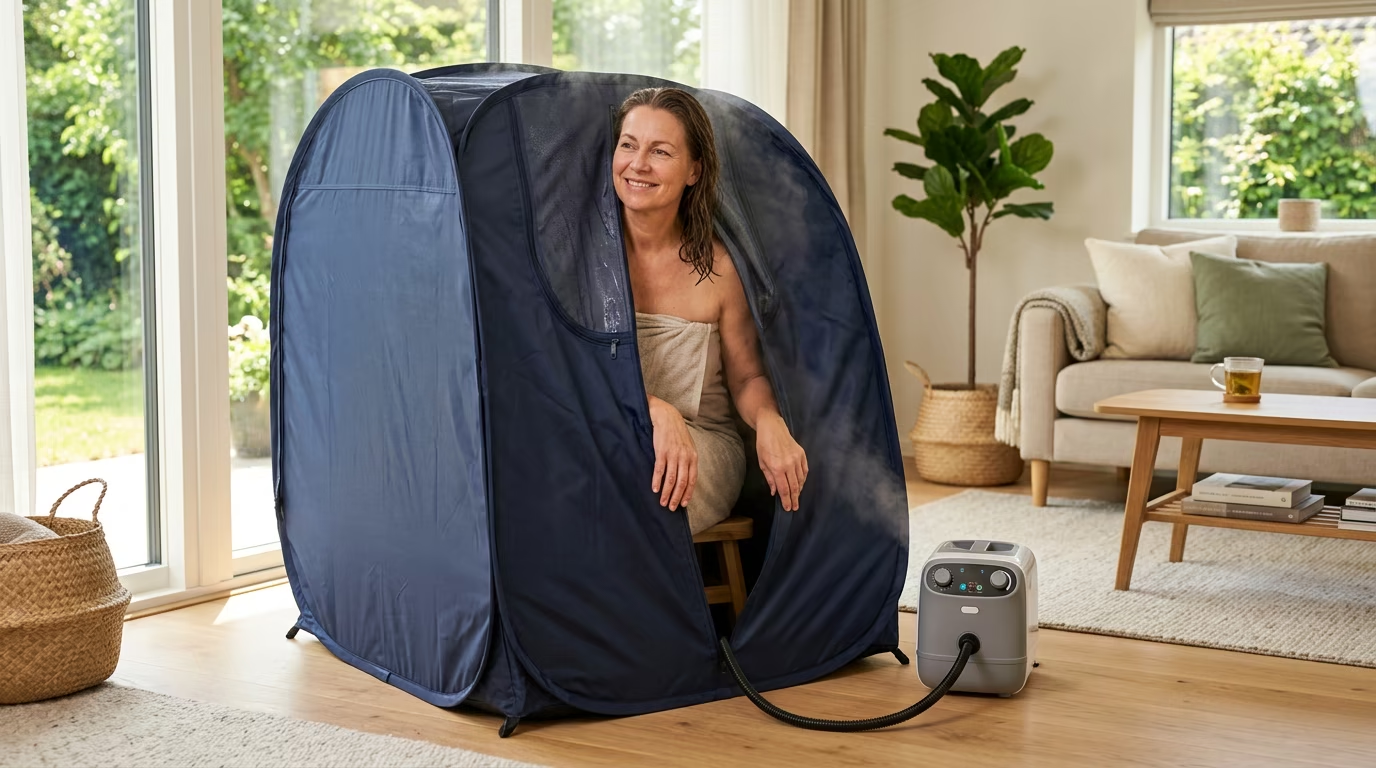
It is a folding fabric enclosure with a chair inside, a steam pot the size of a rice cooker beside it, and a hole for your head. The listings promise detox, weight loss, glowing skin and a spa experience for the price of a decent pair of boots. Some of that is real. Most of it is marketing, and a few of the practical problems — the condensation, the cleaning, the mildew — appear nowhere in the photos.
None of that makes these things junk. It makes them a specific product with a specific honest case: a cheap way to find out whether you actually like steam before spending five figures on a tiled room. Here is what they are, what they genuinely do, and where the listings stop telling the truth.
The Short Answer
A portable steam room — also sold as a portable steam sauna, steam sauna tent, or steam spa — is a personal steam enclosure you set up in a spare room and fold away afterward. Prices run from about $80 to $1,000.
It produces real steam and real heat, and sitting in one is a genuinely pleasant, genuinely sweaty experience. It does not replicate a built steam room — it runs cooler and less saturated — and it does not do most of what the listings claim. As a low-cost trial of the steam habit, or as a comfort tool for someone who loves humid heat, it is a fair purchase. As a substitute for a spa, a sauna, or medical treatment, it is not.
What a Portable Steam Room Actually Is
The category is consistent across brands. You get four things.
A folding tent, usually a polyester or nylon shell over a flexible frame, roughly 3 feet square and 5 to 6 feet tall. A steam generator — a lidded pot holding 2 to 4 liters of water, with a heating element around 800 to 1,500 watts, a timer, and sometimes a remote. A hose that carries steam from the pot into the tent. And a folding chair, because you sit.
Your head stays outside through a zippered collar; some models have hand holes so you can read. Setup takes five to fifteen minutes, the pot takes ten to fifteen minutes to produce steam, and a session is typically 15 to 30 minutes. Then you wipe the thing down, which is the part the listings do not photograph.
Note the naming confusion, because sellers exploit it. These are steam tents, not saunas. A portable infrared sauna — a similar tent with heating panels instead of a steam pot — is a different product with a dry-heat experience. “Portable steam sauna” in a listing usually means the steam version, and the clunkiest listings hedge with “portable sauna steam room,” a phrase that exists because people type it into search bars, not because anyone says it out loud.
What You Get at Each Price
| Price tier | What it buys | What to expect |
|---|---|---|
| Under $150 | Basic tent, 800–1,000W pot, manual dial | Thin fabric, small pot, shorter sessions, hit-or-miss zippers |
| $150–400 | Larger tent, 1,000–1,500W pot, remote, timer, better chair | The sensible middle; stronger steam, sturdier frame, herb box |
| $400–1,000 | Full-body tent or premium build, 1,500W+, fast heat, warranty | Head-inside designs, dual layers, brand support and parts |
The under-$150 tier works, in the sense that it makes steam. The compromises are durability and steam output — thin shells lose heat, small pots run dry mid-session, and zippers are the first failure point. For a pure try-it-and-see purchase, that may be exactly right.
The middle tier is where most buyers should land. A 1,000-watt-plus pot holds temperature properly, and the frames stop feeling like laundry hampers.
The top tier buys build quality, head-inside designs, and a company that answers email. It does not buy a categorically different experience. No tent at any price becomes a tiled steam room.
How Hot They Really Get
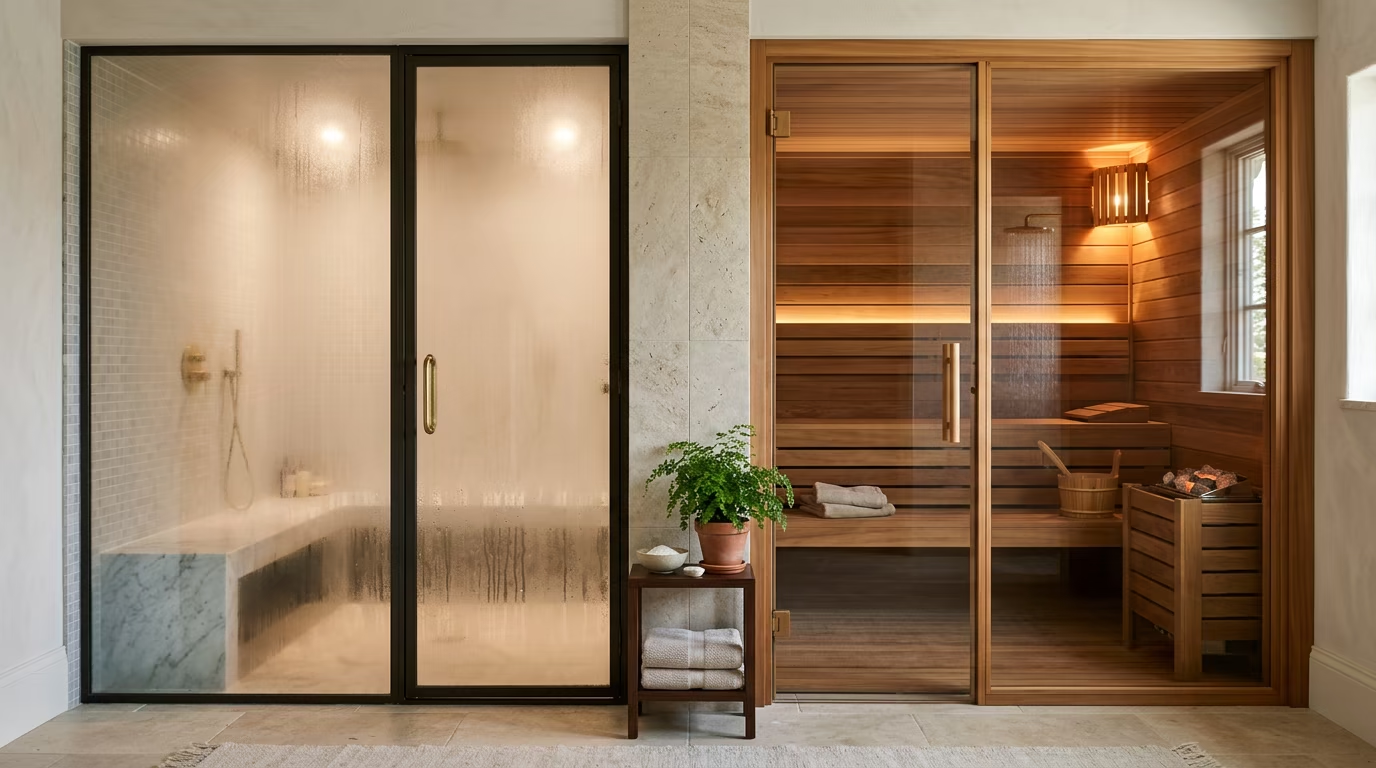
A built steam room runs 110 to 120°F at humidity near 100 percent, and it holds that uniformly because the entire room is saturated, insulated and sealed.
A steam tent does not match that, and the listings’ implied equivalence is the category’s central exaggeration. Inside a typical tent, the temperature near the steam inlet reads 110 to 120°F, but the air around you is usually closer to 100 to 115°F, and the humidity is lower and less even than a sealed tile room delivers. Your torso, nearest the hose, gets the most steam. Your lower legs get the least.
You will still sweat heavily, because even a modestly hot humid enclosure defeats evaporative cooling. The subjective experience is genuinely steam-room-like. Just calibrate expectations: this is a strong personal steam bath, not the enveloping, uniform fog of a spa steam room, and anyone who has used both will tell you the difference immediately.
The Honest Benefits Case
Strip the claims down to what is defensible.
Heat and sweat. A 20-minute session raises your core temperature and heart rate modestly and makes you sweat a great deal. That is real heat exposure, and heat exposure in general has reasonable evidence behind it — temporary circulation and blood pressure effects, relaxation, the pleasant lethargy afterward.
Skin and airways. Warm humid air hydrates the outer skin layer and loosens congestion. This is steam’s best-documented comfort territory, and a tent delivers it about as well as a built room does.
Sleep and relaxation. Many users report sleeping well after evening sessions, which matches what is known about passive heating before bed.
What is not defensible: “detox,” in any formulation, since sweating does not remove toxins in meaningful amounts. Weight loss beyond water weight that returns with your next glass of water. Immune boosting, toxin flushing, cellulite reduction, and the rest of the listing copy. And the specific long-term sauna research — the Finnish cardiovascular data — was gathered at higher temperatures in dry saunas over decades of frequent use. A steam tent is not that exposure, and borrowing its evidence is a stretch.
The Downsides the Listings Skip
These are the reasons these products end up in closets.
Condensation goes everywhere. The inside of the tent drips. Water pools in the floor of the shell, runs out when you exit, and condenses on whatever surface the tent sits on. You need a towel under it, a towel in it, and a hard floor or mat beneath — carpet is a bad idea, and hardwood is a risky one.
Cleaning is a chore. Every session leaves the interior wet, and wet fabric enclosed in a warm room is a mildew incubator. The tent must be wiped and aired after use, every time, no exceptions. Owners who skip this learn why within a month.
Mildew risk is structural, not incidental. The fabric, seams and floor stay damp longest exactly where you cannot see. Drying the tent fully before folding it away is the difference between a product that lasts two years and one that smells in six weeks.
Zippers and seams are the failure points. The steam pot almost never dies first. The zipper you fight twice a day does, or a seam lets go, and at the budget end neither is repairable.
Durability in general. This is a $150 fabric product, not an appliance. Expect one to three years of regular use, not a decade.
Setup, Storage and the Spare-Room Reality
The pitch is “folds away when not in use,” and it is technically true. A collapsed tent fits in a closet or under a bed.
The reality is that nothing you must assemble, fill, heat, wipe down, dry and disassemble gets used casually. The owners who keep the habit are the ones who leave the tent set up permanently in a corner — a spare room, a garage with a mat, a large bathroom — and at that point it is not portable anymore, it is just a small unattractive steam room.
That is fine. Just buy it with that expectation: plan for a permanent parking spot near an outlet, on a water-tolerant floor, with ventilation, because a small closed room fills with humidity fast. A GFCI-protected outlet is the right call anywhere you are combining a heating element, water and your body.
Safety: What to Check Before Buying
The risks are modest and manageable, but check these before money changes hands.
Auto shut-off and boil-dry protection on the steam pot. This is the one non-negotiable. A pot that keeps heating an empty tank is a fire risk, and every unit you consider should cut power automatically on low water and on timer end.
Certifications. Look for ETL or UL listing on the electrical unit. At the bottom of the price range, uncertified pots are common, and this is the wrong place to save $20.
Materials. The tent will sit in hot vapor against your skin. Look for BPA-free claims on the shell and a pot with a stainless interior rather than bare aluminum or thin plastic.
Scald sense. The hose and the steam outlet get dangerously hot, and the pot holds near-boiling water. Keep the hose routed so you cannot grab it mid-session, keep the pot outside the tent, and keep the whole setup away from children and pets.
Health basics. Same rules as any heat: hydrate, skip alcohol, get out if lightheaded, and talk to a doctor first if you have cardiovascular issues or are pregnant.
Who They Are Actually Good For
The steam-curious. If you are wondering whether a built steam room or steam shower conversion is for you, a $200 tent is the cheapest possible way to find out. It answers the question in two weeks.
Renters and small-space dwellers who cannot modify anything but want humid heat on demand.
Cold-season comfort seekers. If your actual goal is warm humid air for dry skin and stuffy sinuses from November to March, a tent does that job well and cheaply.
Anyone who already knows they love steam and cannot access a spa. Frequency is what makes heat worthwhile, and a tent in the corner of the bedroom beats a gym steam room you visit twice a month.
Who should skip it: anyone drawn in by detox or weight-loss promises, anyone unwilling to do the wipe-down-dry-down routine, and anyone with the budget and space for the real thing — the tent is a trial and a compromise, not a destination.
Portable vs. Gym Membership vs. Built-In
| Portable steam tent | Gym/spa membership | Built steam shower | |
|---|---|---|---|
| Upfront cost | $80–1,000 | $0–200 | $8,000–25,000 |
| Ongoing cost | Pennies per session | $30–150/month | Low (utilities, descaling) |
| Steam quality | Decent, uneven | Real, if maintained | Real, uniform |
| Convenience | At home, setup overhead | Travel, shared, hours | At home, instant |
| Hygiene control | Yours entirely | Theirs entirely | Yours entirely |
| Break-even vs. gym | 1–12 months | — | Years |
The gym comparison is the one worth doing honestly. A $200 tent that you use four times a week pays for itself against a $50-a-month membership in four months — but only if you actually use it, and the tent’s setup-and-cleaning friction is precisely what kills usage. The built-in version is the opposite trade: enormous upfront cost, near-zero per-use friction. Frequency of use is the only variable that matters, and you cannot know yours until you have a habit to measure. Which is, once again, the honest argument for the tent: it is the cheapest instrument for measuring it.
Common Questions
Is a portable steam room for home use worth it?
As a low-cost way to try regular steam, yes. As a replacement for a built steam room, no — they run cooler and less saturated. As a detox or weight-loss tool, absolutely not, because those claims are not real. Buy one to answer the question “will I use steam often?” and it earns its price either way.
How hot does a portable steam sauna get?
Typically 100 to 115°F in the air around you, with readings up to 120°F near the steam inlet. That is below the 110 to 120°F of a built steam room, and the humidity is less uniform, but it is hot and wet enough to produce heavy sweating within ten minutes.
Is a portable steam room as good as a real steam room?
No, and the sellers know it. A tiled steam room saturates a sealed, insulated space uniformly; a tent concentrates steam near the inlet and loses heat through thin fabric. The tent version is genuinely enjoyable and roughly 80 percent of the sensation for roughly 2 percent of the price.
Do portable steam saunas help you lose weight?
You will weigh less after a session, and it is water. It comes back when you rehydrate, which you should do promptly. No form of sitting in heat produces meaningful fat loss, and any listing claiming otherwise should lower your trust in everything else on that page.
Can I use one every day?
Healthy adults generally can, at 15 to 30 minutes per session, with attention to hydration. The more relevant daily question is whether you can keep up the cleaning — daily use with poor drying is how tents mildew within weeks.
What is the difference between a portable steam sauna and a portable infrared sauna?
The steam version fills a tent with wet heat from a boiling pot — humid, dripping, steam-room-like. The infrared version heats you with dry radiant panels — hotter-feeling air temperature, no moisture, sauna-like. They are different experiences solving for different preferences, and listings that blur them are counting on you not knowing which one you wanted.
Keep Reading
- Steam Room vs. Sauna: Which One Belongs in Your Home — The full comparison before you commit to either.
- Sauna Benefits: What the Research Actually Shows — What the strong evidence covers, and why it does not transfer to steam tents.
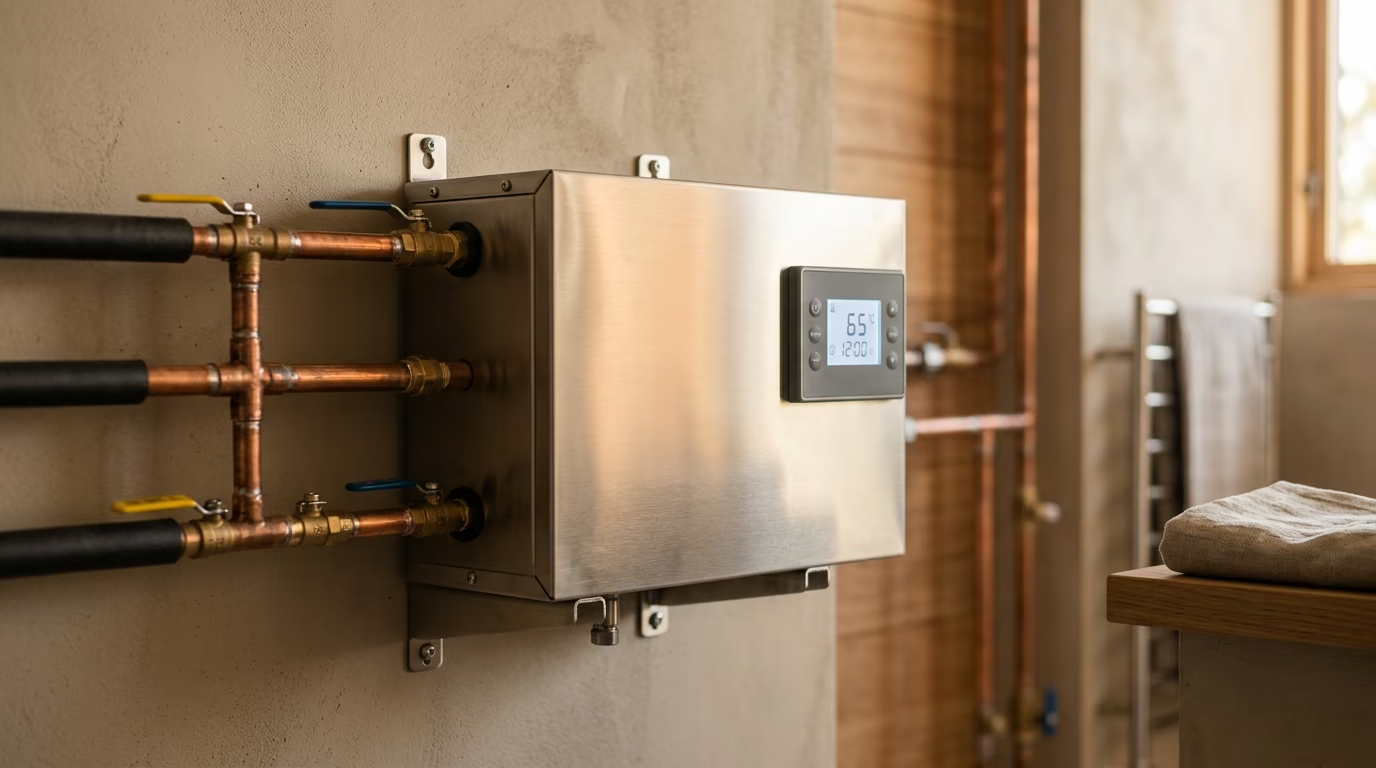
- Steam Shower Generator — The hardware behind the permanent version, when the tent has convinced you.