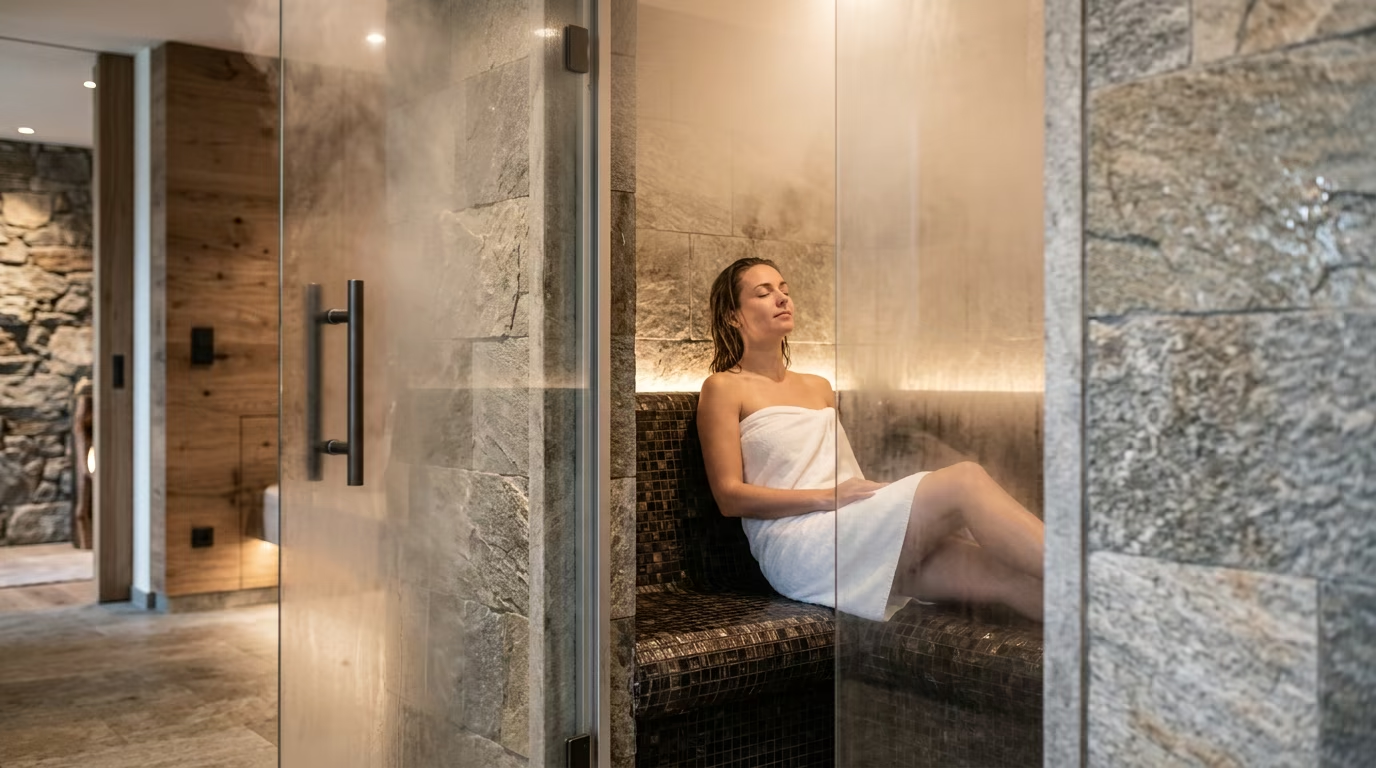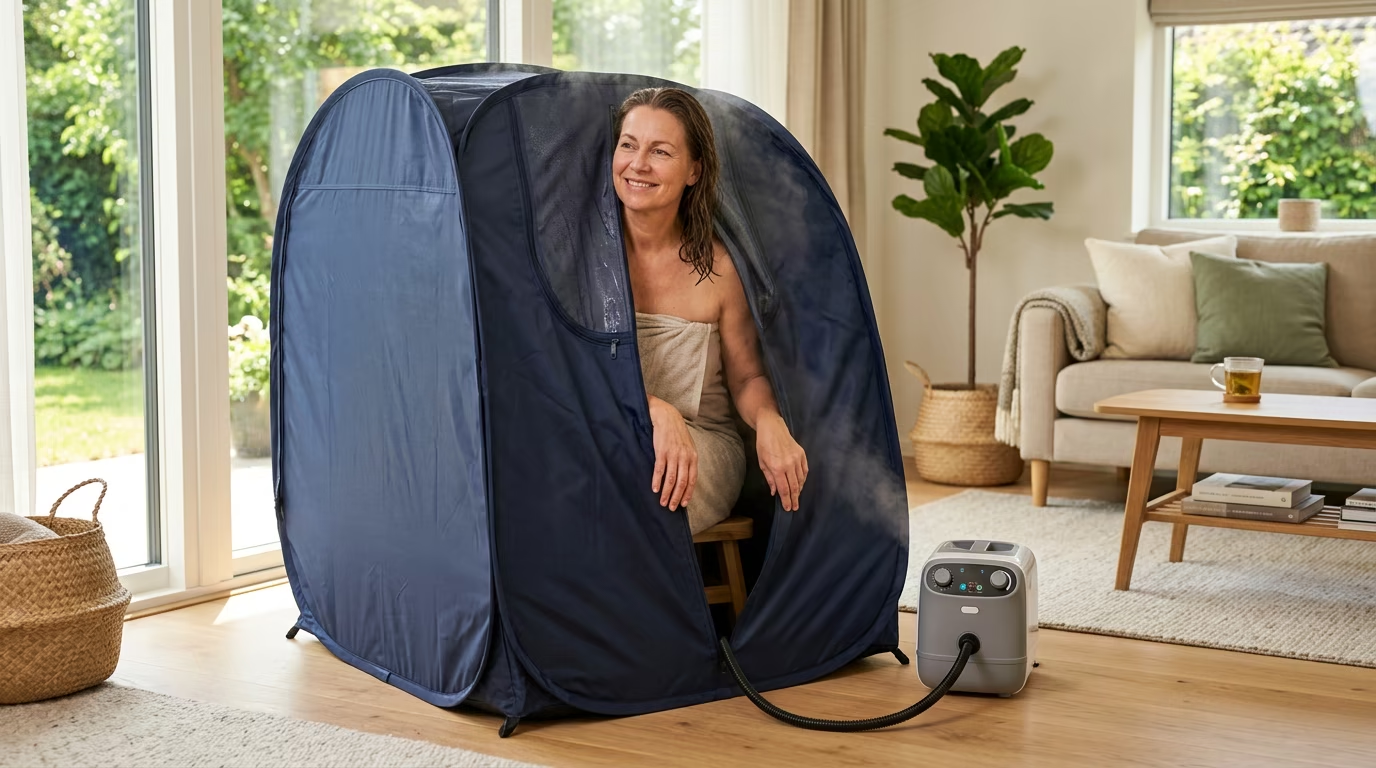
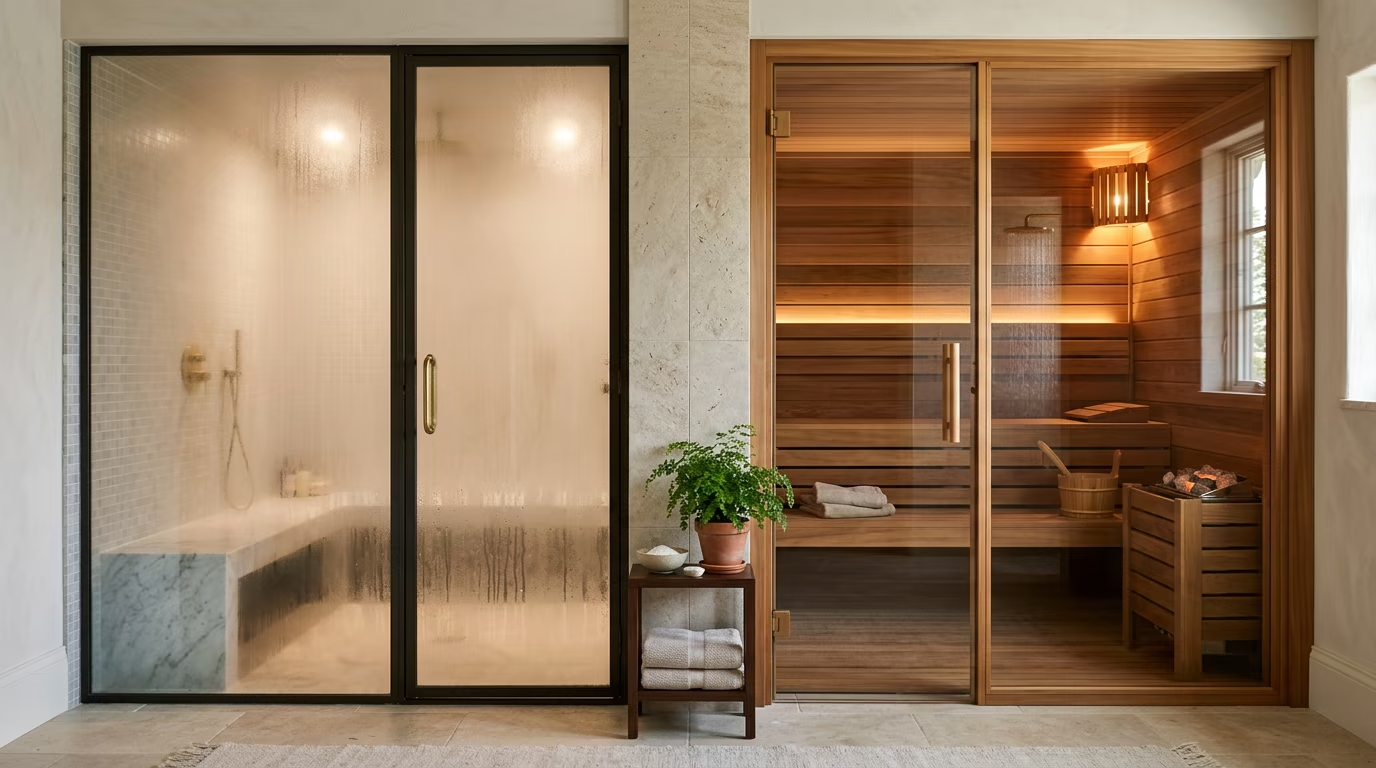
Both will make you sweat. That is roughly where the similarity ends.
A sauna is a hot, dry room — 175 to 195°F, with humidity down around 10 to 20 percent. A steam room is a warm, wet room — 110 to 120°F, with humidity close to 100 percent. The thermometer says the sauna is far hotter. Your body, sitting in saturated air that will not let sweat evaporate, often disagrees.
The steam room vs sauna question is not really about which is healthier — the honest answer is that the evidence is lopsided. It is a question about which experience you will actually seek out three times a week, and about what your house can physically support. One of these is a carpentry project. The other is a waterproofing project. Here is the comparison without the brochure language.
The Short Answer
A sauna is a wooden box that gets very hot and stays dry. It is easier to build, cheaper to maintain, and backed by decades of real research. Most people who want heat at home should default here.
A steam room is a tiled, sealed, waterproof room filled with vapor from a generator. It runs cooler but feels more intense to many people, is genuinely kind to skin and airways, and demands a far more careful — and more expensive — construction.
If you love the feeling of a hot, foggy shower that never ends, a steam shower conversion of an existing bathroom is the practical route. If you love the dry, radiant heat of a wooden room, build the sauna. If you are undecided, the sauna is the lower-risk bet on every axis except personal preference — and preference is the one thing you should test in person before spending anything.
How Each One Actually Feels
A traditional sauna heats the air to 175 to 195°F. Humidity stays low, around 10 to 20 percent, though you can throw water on the stones to spike it briefly. Sweat evaporates off your skin continuously, which is what makes such an extreme air temperature survivable. The heat feels dry and radiant. Breathing the air is noticeably hot on the first few sessions and ordinary by the fifth.
A steam room runs at 110 to 120°F with humidity at or near 100 percent. At that humidity sweat cannot evaporate at all. It pools on your skin, which is why a steam room at 115°F can feel as demanding as a sauna at 180°F. The air is thick and wet. Condensation rains off the ceiling if the slope is wrong.
Neither feeling is better. They are different, and people tend to have a strong, immediate preference. This is why the advice everyone gives and few follow — visit a gym or spa that has both — is correct.
What the Research Says
This is the section where honesty costs the steam room some sales.
The sauna literature is genuinely strong. Long-running Finnish cohort studies, most notably out of the University of Eastern Finland, followed thousands of men for decades and found frequent sauna bathing associated with lower cardiovascular mortality and lower rates of dementia. It is observational data, so it shows association rather than proof, but the effect sizes were large and they have held up. That research was done on traditional dry saunas.
The steam room literature is thin. There is reasonable small-study support for heat exposure generally, and steam rooms deliver heat exposure. There is decent evidence that warm humid air eases perceived congestion and feels good on irritated airways. What does not exist is a large body of research isolating steam rooms and tracking long-term outcomes. Anyone who tells you steam rooms are “proven” to do specific things is extrapolating from sauna studies and hoping you will not notice.
So the honest summary of sauna vs steam room benefits is lopsided: sauna benefits have a real research base, while steam room benefits are plausible, largely shared with heat in general, and under-researched. Buy steam because you love it, not because a website promised you detox. Nothing sweats out toxins. Your liver does that, and it does not read product pages.
Skin and Breathing: Where Steam Wins
Steam’s genuine advantages are specific and worth naming.
Skin. Warm saturated air hydrates the outer layer of skin and softens it, which is why facials start with steam. People with dry skin often feel visibly better after regular steam sessions. Dry sauna air runs the other direction — fine for most, occasionally irritating for anyone prone to dryness or eczema.
Airways. Humid heat loosens mucus and soothes dry, inflamed nasal passages. During cold season, fifteen minutes in a steam room is one of life’s simple mechanical pleasures. It does not cure anything. It makes you feel less like a plugged drain, and that has value.
Heat tolerance. Some people find dry 190°F air harsh to breathe and simply cannot relax in a sauna. The lower air temperature of a steam room suits them. The best heat therapy is the one you do not dread.
Recovery and Heat Adaptation: Where Sauna Wins
The sauna’s advantages are equally specific.
The cardiovascular research base, as covered, belongs to the sauna. So does most of the evidence around heat adaptation — the physiological changes from repeated heat exposure, including improved heat tolerance and plasma volume expansion, which athletes use deliberately. Steam rooms produce a strong heat load too, but the protocols and the data come from the dry side. If you are buying heat partly for the research, buy the heat the research measured.
An infrared sauna, for completeness, is a third thing — a cooler cabin, typically 120 to 150°F, that heats your body with radiant panels rather than heating the air. It is cheaper, plugs into a regular outlet, and the Finnish evidence does not apply to it directly. In the infrared sauna vs steam room comparison, you are weighing two pleasant experiences with thin research, so cost and preference should decide.
What Each One Demands From Your House
This is where the decision is actually made, because the two projects are not the same kind of project.
What a sauna asks for
A sauna is a dry room made of wood. It needs framing, insulation, a foil vapor barrier, cedar or thermally modified wood cladding, benches, a heater, and a dedicated electrical circuit — 240V at 40 to 60 amps for a typical 6 to 8 kW heater. An infrared cabin skips most of that and plugs into the wall.
That is carpentry plus an electrician. It is a well-understood project, and failures are rare and undramatic. A poorly built sauna is inefficient. It is not destructive.
What a steam room asks for
A steam room is a wet room that must not leak vapor into the rest of your house, ever, for decades. It needs a fully waterproofed and vapor-sealed enclosure — a continuous membrane behind tile on every surface, including the ceiling. The ceiling needs a slope, usually around 2 inches per foot, so condensation runs down the walls instead of dripping on your head. The door needs to seal. The floor needs a drain and a slope toward it. The generator needs a water line, a drain, power, and a home somewhere within roughly 25 feet of the room.
Waterproofing is the crux. Vapor at 100 percent humidity finds any gap, and a missed seam behind the tile does not announce itself — it feeds mold inside your walls for a year before the paint bubbles. A poorly built sauna costs you efficiency. A poorly built steam room costs you a wall.
This is not an argument against steam rooms. Properly waterproofed systems exist and work, and a good tile contractor who has built steam showers before will do it correctly. It is an argument for treating the build as a plumbing-and-tile project with strict tolerances, not as a sauna that happens to be wet.
Cost: Buying, Installing, Running
| Item | Sauna (indoor traditional, 2–4 person) | Steam shower (converted shower, 2 person) |
|---|---|---|
| Unit or kit | $4,000–12,000 prefab | $1,500–6,000 generator and controls |
| Construction | $2,000–8,000 framing, wood, labor | $6,000–20,000 waterproofing, tile, glass, plumbing |
| Electrical | $600–2,500 dedicated 240V | $400–1,500, usually 240V for the generator |
| Typical all-in | $6,000–20,000 | $8,000–25,000 |
| Cost per session | $0.60–1.60 | $0.30–1.00 |
The sauna’s money goes into the box. The steam room’s money goes into the room — the tile, the membrane, the glass, the labor of sealing it. A prefab sauna kit is genuinely a weekend assembly for two capable people. A steam shower conversion is a remodel, and it is priced like one.
Running costs are modest on both sides. A sauna session costs roughly 60 cents to $1.60 in electricity. A steam generator runs 15 to 30 minutes per session at lower wattage, so steam often comes in a little cheaper per session. Neither figure will ever be the reason you regret the purchase.
Maintenance Over the Years
A sauna asks for very little: bench sanding occasionally, heater stones replaced every one to three years, wood left alone. Because it is dry, it does not grow things. Ten-year-old saunas routinely look and work like new ones.
A steam room asks for attention. Tile and grout need regular cleaning, because warm wet surfaces are where mildew wants to live, and grout may need resealing. The generator’s tank needs periodic descaling — in hard-water areas that is a real chore, and some owners install a water softener just for the generator. None of this is burdensome if you stay on top of it, and all of it is burdensome if you do not.
Space Requirements
A two-person sauna can be genuinely small — around 4 by 4 feet of floor, 7 feet of ceiling, and infrared cabins come smaller. A comfortable four-person sauna runs 6 by 8 feet.
A steam room can be exactly the size of your existing shower, because that is usually what it is. A standard 3 by 4 foot shower converts to a two-person steam shower, the most space-efficient way to get either experience into a normal house.
Winner on footprint: steam, narrowly. Winner on flexibility of placement — basement, garage, backyard: sauna, by a wide margin, because it does not need plumbing.
Side by Side
| Sauna | Steam room | |
|---|---|---|
| Temperature | 175–195°F | 110–120°F |
| Humidity | 10–20% | ~100% |
| Typical session | 10–20 minutes | 10–20 minutes |
| Research base | Strong (Finnish cohort data) | Thin |
| Best documented effects | Cardiovascular associations, heat adaptation | Skin hydration, airway comfort |
| Build type | Carpentry + electrician | Waterproofing + tile + plumbing |
| Typical all-in cost | $6,000–20,000 | $8,000–25,000 |
| Cheapest entry point | Infrared cabin, ~$2,500 | Portable steam tent, ~$100–400 |
| Running cost per session | $0.60–1.60 | $0.30–1.00 |
| Maintenance | Low | Moderate (cleaning, descaling, grout) |
| Main construction risk | Undersized heater | Vapor leaks, mold in walls |
| Smallest practical footprint | ~4 x 4 ft | Existing shower stall |
Can You Have Both
Yes, and people do — but not in one room. A sauna and a steam room are separate builds with separate requirements, and combining them into a single enclosure satisfies neither. The realistic versions of “both” are these.
A sauna plus a steam shower: the most common pairing in high-end bathrooms, with a total budget of roughly $15,000 to $35,000, most of it in the steam shower.
A sauna plus a cold plunge: not the same thing, but if what attracts you to steam is the ritual rather than the humidity, contrast between dry heat and cold delivers a more researched version of the experience for less money and far less construction risk.
Which One You Will Actually Use
The honest deciding factor is not in any table. It is which room you walk toward on a Tuesday night when nobody is watching.
Adherence is the entire game with heat therapy. The Finnish outcomes tracked people who sauna four to seven times a week for decades, and that only happens when the experience is something you crave rather than something you assigned yourself. Before you spend anything, spend $40 on a day pass somewhere that has both, use them back to back, and notice which one you think about the next day.
If you already know you love the fog, build the steam shower and budget for proper waterproofing. If you love the dry heat, or you are not sure, the sauna is the safer default: cheaper to build, cheaper to keep, better researched, and forgiving of a mediocre install in a way steam never is.
Common Questions
Is a steam room or sauna better for you?
Neither is medically established as “better,” and the research is not balanced. The strong long-term evidence — cardiovascular associations from Finnish cohort studies — was gathered on dry saunas. Steam rooms share the general benefits of heat exposure and add real comfort for skin and airways, but their specific research base is thin. Buy the one you will use most.
What is the difference between steam room and sauna?
Temperature and humidity. A sauna runs 175 to 195°F with dry air. A steam room runs 110 to 120°F with near-total humidity. The sauna heats you with hot air; the steam room heats you by preventing your sweat from evaporating.
Which is cheaper to build at home?
A sauna, in most cases. A kit sauna is largely a carpentry project plus one electrical circuit. A steam room is a full waterproofing, tile, glass and plumbing project, and the labor drives the cost. The budget exception is steam at the low end: a portable steam tent costs a few hundred dollars, less than any real sauna.
Can I turn my existing shower into a steam room?
Usually, yes, and it is the most practical route into steam. It requires a steam generator, a sealed glass enclosure up to the ceiling, and a completely waterproofed stall. The generator hardware is the cheap part; making the enclosure truly vapor-tight is where the money and the risk live.
Is an infrared sauna a good middle ground?
It is a different thing rather than a middle one: a cooler cabin, typically 120 to 150°F, that heats your body with radiant panels. It is the cheapest and easiest of the three to own, and the long-term Finnish evidence does not directly apply to it. If convenience and cost decide for you, it is a reasonable choice.
Which one is better for a cold or congestion?
The steam room, by feel. Warm saturated air loosens mucus and soothes irritated airways in a way dry heat does not. It relieves symptoms; it does not shorten the illness. Dry sauna air can actually feel harsh on an already-inflamed nose and throat.
Keep Reading
- Sauna Benefits: What the Research Actually Shows — The Finnish evidence behind the dry side of this comparison.
- What a Home Sauna Actually Costs — Line-by-line pricing, including the electrical work.
- Steam Room Benefits — What steam genuinely does, and what is marketing.