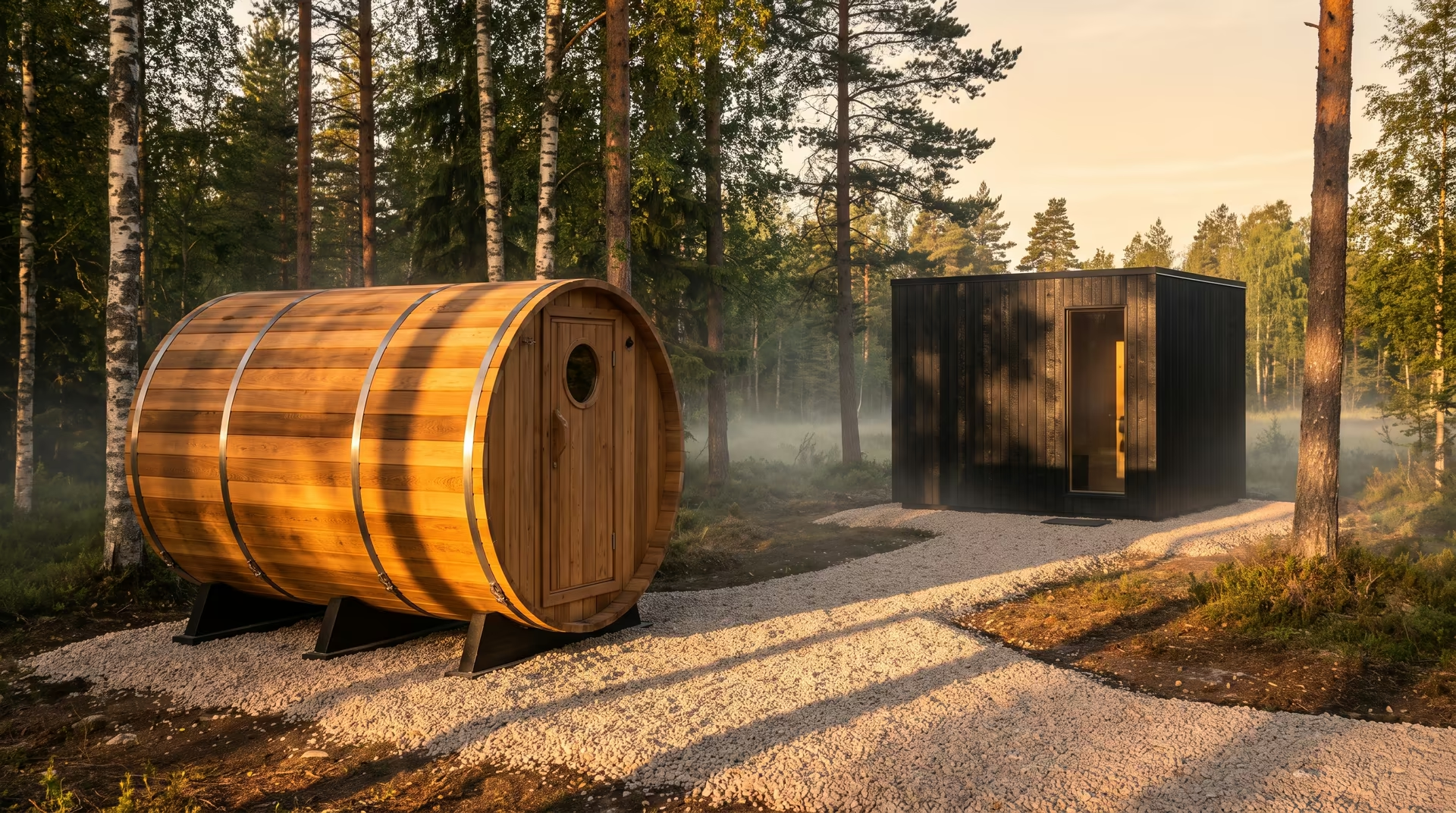
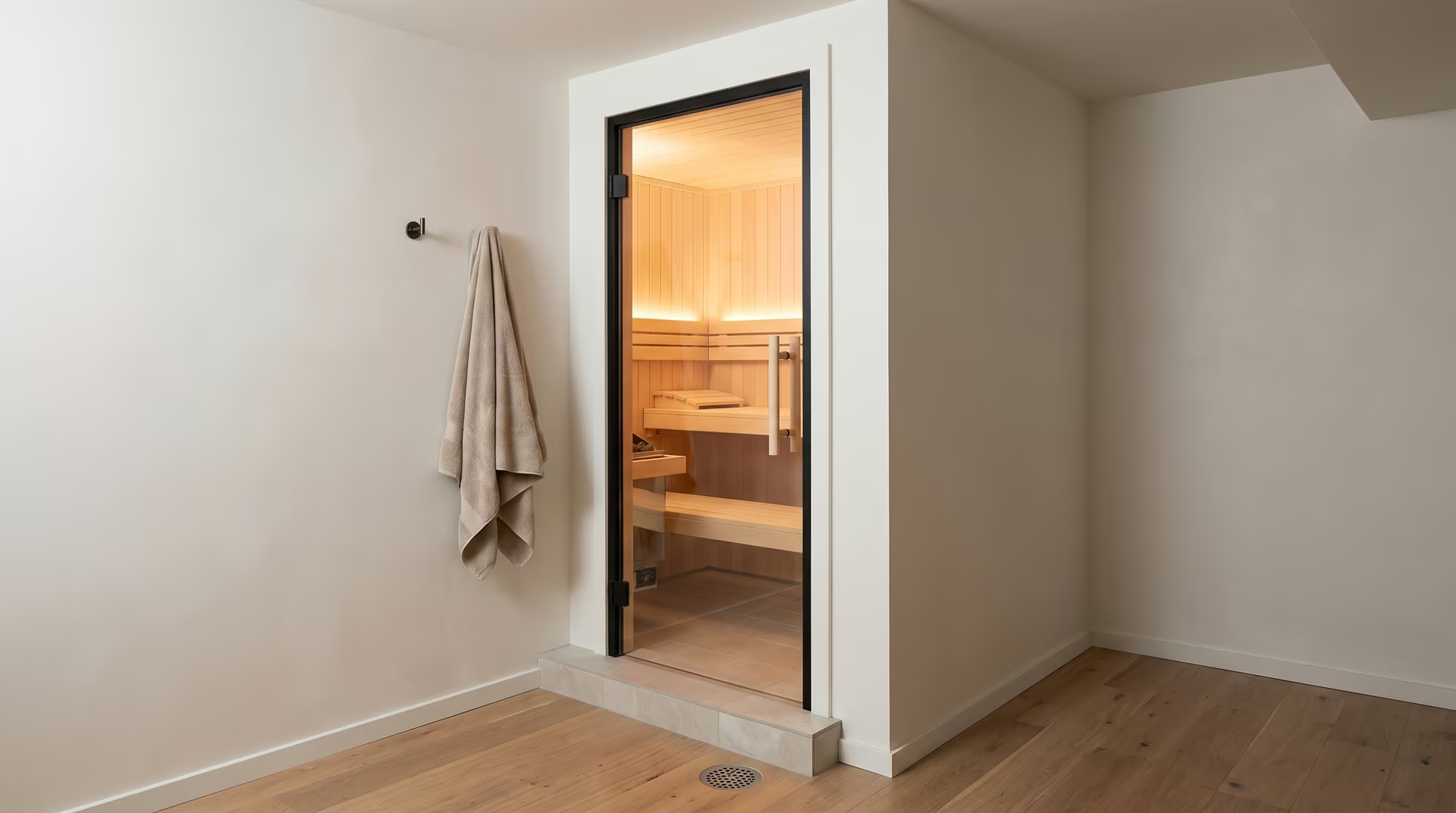
The number on the product page is between 55 and 75 percent of what you will spend.
That is not a criticism of the manufacturers — they sell a sauna, not an installation. But it means most people budgeting for this arrive at a figure that is thousands of dollars short, and they find out after the freight truck has already been scheduled.
Below is the full accounting: the cabin, the heater, the electrical, the pad, the delivery, the permit, and the cost per session afterward. Figures are United States averages for 2026 and vary considerably by region, so treat them as ranges to plan against rather than quotes.
The Short Answer, by Type
| Type | All-in cost | Notes |
|---|---|---|
| Sauna blanket | $400–800 | Not really a sauna, but it is the cheapest heat |
| One-person infrared | $1,500–3,000 | Plugs into a standard outlet |
| Two-person infrared cabin | $2,500–5,000 | The most common first purchase |
| Four-person infrared cabin | $4,500–8,000 | May need 240V |
| Indoor traditional prefab | $6,000–12,000 | Includes electrical in most homes |
| Custom indoor build | $12,000–28,000 | Converting a closet, bathroom or basement corner |
| Outdoor barrel sauna | $9,000–18,000 | Including pad, electrical, delivery |
| Outdoor cabin sauna | $14,000–30,000 | Including pad, electrical, delivery |
| Architectural outdoor build | $35,000–80,000+ | Custom design, glazing, deck, landscaping |
The two figures worth noting: an infrared cabin in a spare room is genuinely affordable and installs in an afternoon. An outdoor traditional sauna is a construction project with a construction project’s budget.
What the Sauna Itself Costs
Infrared cabins: $1,500 to $8,000. Price tracks size, panel quality and cabinet material. Hemlock is the budget shell, cedar the upgrade. Carbon panels heat more evenly than ceramic and cost more. Most of the price difference between a $2,500 and a $5,000 two-person cabin is materials and warranty rather than performance.
Traditional prefab kits: $4,000 to $20,000. Precut lumber, benches, door, and usually the heater. Barrel kits sit at the lower end; insulated cabin kits at the upper.
Custom builds: $8,000 to $25,000 in materials and labor. Converting an existing space means framing, insulation, a vapor barrier, foil facing, cedar cladding, a bench build, a proper door and a drain if the floor needs one. The labor is the majority of it.
Where the money goes inside that range: wood species first, then glass. A full glass front on an outdoor cabin can add $3,000 to $8,000 by itself, and it is the single most common upgrade people choose.
What the Heater Costs
Frequently excluded from kit prices. Check before you assume.
| Item | Cost |
|---|---|
| Electric heater, 6–8 kW | $700–2,000 |
| Wood-burning stove | $900–2,500 |
| Chimney kit and flashing | $400–1,200 |
| Digital control panel or timer | $150–500 |
| Sauna stones | $50–150 |
| Guard rail around heater | $80–250 |
Do not economize here. An undersized heater is the one mistake you cannot correct without replacing the unit, and the sizing rule is roughly one kilowatt per 45 to 50 cubic feet of interior volume, increased for glass and for uninsulated walls.
Stones are consumable. They fracture over time and want replacing every one to three years depending on use. Budget a little for that and buy the correct peridotite or olivine stones rather than whatever is in the yard.
Electrical: The Hidden Line Item
This is the line that ruins budgets.
| Scenario | Cost |
|---|---|
| Dedicated 240V circuit, panel nearby, indoor | $600–1,500 |
| Same, with a long interior run | $1,200–2,500 |
| Outdoor run with trenching, conduit, GFCI | $1,800–4,500 |
| Subpanel required at the sauna | $1,500–3,000 |
| Main panel upgrade to 200A | $2,500–6,000 |
| Permit and inspection | $75–350 |
A 6 to 8 kW heater needs a dedicated 240V circuit at 40 to 60 amps. Older homes on 100-amp service frequently cannot accommodate that without an upgrade, and finding that out is what turns a $9,000 project into a $14,000 one.
Get an electrician to look at your panel before you order anything. It costs a service call and it is the highest-value hour in the entire process.
Two ways to avoid the expense entirely: choose an infrared cabin that runs on a standard 120V circuit, or choose a wood-fired heater and skip the electrical run altogether. On a remote site the wood-fired option is often genuinely cheaper.
Site Prep and Foundation
Outdoor only. Indoor saunas need a level floor and, ideally, a drain.
| Foundation | Cost | Suits |
|---|---|---|
| Deck blocks and pressure-treated frame | $200–600 | Barrels, temporary placement |
| Compacted gravel pad | $400–1,200 | Most barrels, good drainage |
| Pavers on gravel base | $800–2,200 | Better appearance, stable |
| Concrete slab | $1,500–5,000 | Cabins, permanent installations |
| Deck extension | $3,000–12,000 | Integrating with an existing terrace |
Add site access if it is difficult. Removing a fence section, hiring a small excavator, or hand-carrying materials to a back garden all cost real money and are rarely quoted upfront.
Delivery and Assembly
Freight delivery: $300 to $1,200. Almost always curbside on a pallet. A 6-foot barrel kit runs 1,200 to 2,000 pounds across several bundles.
Moving it from curb to site: $0 to $800. Free if you have a level path and two strong friends. Expensive if there is a gate, a slope or a flight of steps.
Crane or forklift: $500 to $1,500. Needed for some panelized cabin deliveries and for tight urban sites.
Assembly labor: $0 to $3,000. A barrel kit is a genuine weekend DIY job for two people. A cabin kit may or may not be, and a custom build is entirely contractor work.
Permits and Inspections
Highly local, and the answer is rarely a flat no.
The structure may be exempt if it is under a certain footprint — commonly 100 to 200 square feet, though this is set by your county or municipality rather than nationally. Setback rules from property lines apply regardless of exemption.
The electrical work almost always needs a permit, even when the structure does not. This is the part people skip and later regret, because unpermitted 240V work turns up during home inspections and insurers are unforgiving about fires traced to it.
Wood-fired heaters trigger chimney clearance requirements, often a spark arrestor, and a conversation with your insurance company.
Budget $100 to $800 total for permits in most jurisdictions. Call the building department before ordering rather than after.
What It Costs to Run
Cheaper than people expect, and the calculation is straightforward.
A 6 kW electric heater draws its full rating while heating up and roughly half that once the sauna is at temperature. A session of 45 minutes heating plus 45 minutes of use consumes about 4.5 kilowatt-hours. At a national average of roughly 17 cents per kWh, that is about 75 cents per session.
| Setup | Per session | Three sessions a week, per year |
|---|---|---|
| Traditional electric, 6 kW | $0.60–1.20 | $95–190 |
| Traditional electric, 8 kW | $0.80–1.60 | $125–250 |
| Infrared cabin, 1.6 kW | $0.15–0.35 | $25–55 |
| Wood-fired | $3–6 in firewood | $470–940 |
Electricity rates swing that considerably — Hawaii and parts of California run more than double the national average, while much of the South and Pacific Northwest run below it.
Maintenance adds a small amount: stones every one to three years, a band re-tension on a barrel, sealant or oil on exterior wood if you are not letting it silver, and an occasional bench sanding. Call it $50 to $200 a year.
Where People Overspend and Where to Save
Worth paying for
- A correctly sized heater. The only irreversible decision on the list.
- Good wood on the benches. Thermally modified aspen or alder does not burn your skin at 190°F. This is a comfort difference you feel every single session.
- Proper electrical work, permitted. Not a place for economy.
- One size larger than you calculated. The incremental cost is modest, and the most common regret reported by owners is size.
- Insulation, in cold climates. It pays for itself in running cost and it makes winter use pleasant rather than marginal.
Usually not worth it
- Chromotherapy lighting. Colored LEDs at a substantial markup. A dimmable warm light does more for the room.
- Built-in sound systems. They fail in heat and humidity, and a portable speaker outside the door sounds better anyway.
- Premium brand markup on infrared cabins. The gap between mid-market and premium is mostly cabinetry and warranty. Panel technology has largely converged.
- Full glass fronts, unless the view earns it. Expensive, and they increase heat-up time and running cost considerably.
- Salt walls. Decorative. The health claims attached to them are not supported.
The genuine budget route
An infrared two-person cabin in a spare room, on an existing circuit, assembled in an afternoon. Around $2,500 all in, roughly $30 a year to run, and no permits, no pad, no electrician. It is not the sauna in the photographs. It is the one that gets used four times a week, and consistency is what the research actually rewards.
Common Questions
How much does a home sauna cost in total?
Between about $2,500 for an infrared cabin in an existing room and $18,000 for a typical outdoor barrel sauna fully installed. Custom architectural builds run well past $35,000. The sticker price of the sauna itself is usually 55 to 75 percent of the final figure.
How much does it cost to run a sauna per session?
Roughly 60 cents to $1.60 for a traditional electric sauna, and 15 to 35 cents for an infrared cabin, based on a national average electricity rate. Wood-fired costs more in fuel but nothing in electricity.
Does a sauna add value to a home?
It is not a reliable return-on-investment improvement in the way a kitchen is, and appraisers rarely assign it much value directly. A well-built outdoor sauna can be a differentiator in cold-climate markets. Buy it because you want to use it.
Is an infrared sauna cheaper than a traditional one?
Substantially, on both purchase and running cost, and it usually avoids the electrical work entirely. The trade-off is a milder, different experience and a much smaller research base behind it.
Do I need a permit to install a home sauna?
The electrical work almost always requires one. The structure may be exempt if it is small enough, but that threshold is set locally. Check with your building department before ordering.
What is the cheapest way to get a sauna at home?
A sauna blanket at $400 to $800, or a one-person infrared unit at around $1,500. Neither replicates a traditional sauna, but both provide real heat exposure and neither requires any installation at all.
Keep Reading
- Barrel Sauna vs. Cabin Sauna: How to Choose an Outdoor Sauna — Choosing the shape before you price it.
- Sauna and Cold Plunge: How to Set Up Both at Home — The site work, electrical and water care.
- Sauna Benefits: What the Research Actually Shows — Whether the frequency the research rewards fits your life.