Almost every complaint about a freestanding tub falls into one of four categories: the water goes cold, the water is not deep enough, you cannot clean behind it, or filling it empties the hot water tank.
All four are decided before purchase, and none of them appear in the product photography. Here is what to check.
What Makes a Soaking Tub Different
The distinction is depth, not shape.
A standard American alcove bathtub holds water to about 12 to 14 inches. Lie back in one and your knees, hips or shoulders are above the waterline, which is why ordinary baths tend to leave you half cold.
A soaking tub is designed so that a seated adult is submerged to the shoulders. That means at least 20 inches of water depth, and preferably 23 to 27. The measurement that matters is depth to the overflow, not the overall exterior height of the tub, and manufacturers are not always forthcoming about the difference.
The Japanese ofuro takes this to its conclusion: short in footprint, very deep, often with an integrated seat, designed for sitting upright and fully immersed rather than reclining. In a small bathroom it is frequently the better answer, because it buys depth by giving up length.
The Measurements That Decide Everything
Take these five numbers from any tub you are considering. If the specification sheet does not give them, that is informative in itself.
| Measurement | What to look for | Why |
|---|---|---|
| Depth to overflow | 20 in minimum, 23–27 in ideal | The only number that determines whether it is really a soaking tub |
| Interior length at the base | Compare to your own height minus about a foot | Exterior length is marketing; interior base length is what you lie in |
| Width at shoulder height | 26–30 in for most adults | Tubs narrow sharply toward the top and this is where you feel it |
| Water capacity in gallons | 55–85 typical | Determines the hot water and floor load questions below |
| Backrest angle | 20–30 degrees from vertical | Too upright is uncomfortable; too reclined and you slide |
And one that has nothing to do with bathing: the narrowest door, hallway and stair turn between the front door and the bathroom. A 66-inch cast iron tub that will not go around a landing is a genuinely common and genuinely expensive discovery.
Materials: What Each One Is Actually Like
| Material | Weight empty | Heat retention | Price | The catch |
|---|---|---|---|---|
| Acrylic | 60–100 lb | Good | $600–3,000 | Scratches; can flex if poorly supported |
| Cast iron with enamel | 300–500 lb | Excellent | $1,500–5,000 | Very heavy; enamel chips are hard to repair |
| Solid surface / stone resin | 200–400 lb | Excellent | $2,000–8,000 | Matte finishes can stain if neglected |
| Natural stone | 600–1,200 lb | Poor initially, then good | $5,000–25,000 | Cold to the touch; usually needs structural review |
| Copper | 100–200 lb | Poor | $3,000–12,000 | Heats fast, loses fast; patina needs accepting or maintaining |
| Hinoki or teak | 150–300 lb | Good | $4,000–15,000 | Must be kept damp or it cracks; real maintenance |
Acrylic is underrated. It is light, it feels warm immediately, it holds temperature well, and it costs a fraction of the alternatives. The reason it has a reputation problem is that cheap acrylic tubs are thin and flex underfoot. A well-made acrylic tub with a reinforced base is a perfectly good purchase.
Stone resin is the current sweet spot for anyone wanting the look of stone. Seamless, warm to touch, excellent heat retention, and a matte finish that photographs beautifully. Keep it clean or the matte surface will hold a tideline.
Natural stone is the one to be careful with. A carved marble or basalt tub weighs more empty than most tubs weigh full, and it pulls heat out of the water for the first fifteen minutes until the stone itself warms up. Magnificent, high-commitment.
Wood requires a relationship. A hinoki tub is an extraordinary object, smells remarkable, and will crack if left dry for a long period. It is for people who will use it weekly, not seasonally.
Freestanding, Alcove, Drop-In or Undermount
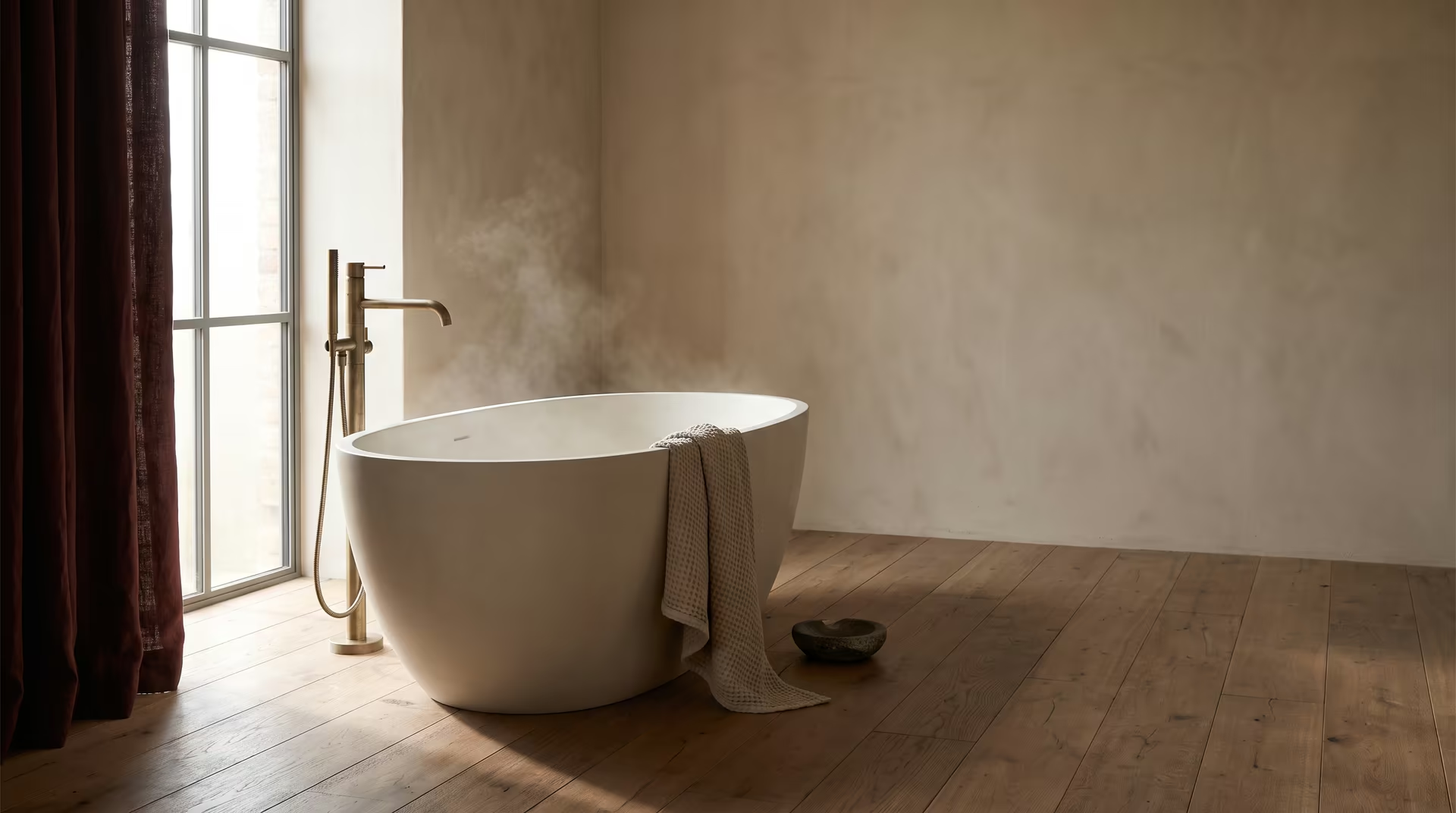
Freestanding is the look everyone is after. It also needs floor space on all sides, a floor-mounted or wall-mounted faucet, and a plan for the gap behind it. Best in rooms where the tub can genuinely be the object in the middle.
Alcove is the cheapest and most space-efficient, using three existing walls. Deep soaking versions of alcove tubs exist and are the sensible choice in a standard bathroom.
Drop-in sits inside a built deck or platform. It gives you a surface for candles and a book, which is a real advantage, and it hides the plumbing. It costs more in carpentry than it saves on the tub.
Undermount sits below a stone or tiled deck with the edge concealed. The most finished appearance and the most expensive to install.
A note on the freestanding trend: in a small bathroom, a freestanding tub often makes the room feel more cramped rather than more luxurious, because it consumes circulation space that an alcove tub would not. Measure the walkway you will be left with before committing.
The Water Problem Nobody Mentions
This is the most common post-purchase disappointment, and it is arithmetic.
A soaking tub holds 60 to 85 gallons, and you fill it to roughly two-thirds. Call it 45 to 60 gallons of water at bathing temperature.
A standard American residential water heater is 40 or 50 gallons — and you cannot use all of it, because the tank mixes cold as it drains. A 50-gallon tank typically delivers 35 to 40 gallons of genuinely hot water before the temperature starts falling.
A large soaking tub can outrun a standard water heater. People fill it, get in, and find the last third arrived lukewarm.
Solutions, in order of cost:
- Match the tub to the tank. A 60-gallon tub works fine on a 50-gallon heater. An 85-gallon one does not.
- Raise the tank thermostat to 140°F and mix down at the tap with a thermostatic mixing valve. This effectively increases usable hot water and is a standard scalding-prevention setup. Do not raise the temperature without the mixing valve.
- Upgrade to a 75 or 80-gallon tank, roughly $1,200 to $2,500 installed.
- Add a tankless unit, which never runs out but delivers at a fixed flow rate — meaning a slow fill. Check the gallons per minute against the tub size or you will wait twenty minutes.
Also check the fill rate of your chosen faucet. A beautiful floor-mounted spout rated at 4 gallons per minute takes fifteen minutes to fill an 60-gallon tub. Tub fillers rated at 7 to 10 gpm exist for exactly this reason.
Floor Load and Structure
Worth a paragraph of arithmetic before you buy something heavy.
A cast iron tub at 400 pounds, plus 60 gallons of water at 8.3 pounds per gallon, plus a person, is roughly 1,060 pounds concentrated in a small footprint. A stone tub in the same situation approaches 1,800.
Standard residential floor framing is designed for 40 pounds per square foot of live load. A tub spreading 1,060 pounds over about 12 square feet is around 88 psf — over the nominal figure, though floors have safety margins and most acrylic and cast iron installations on ground or well-framed upper floors are fine.
Where you should get an engineer or contractor to look:
- Any natural stone tub, on any floor
- Cast iron or stone on an upper floor, particularly in an older house
- Any tub running parallel to and between joists rather than across them
- Any installation over a garage or cantilever
Concrete slab floors make all of this moot.
Faucets: The Decision People Forget
The faucet has to be chosen before the plumbing is roughed in, and before the floor goes down. Changing your mind afterward means opening the floor.
Floor-mounted freestanding filler. The archetypal look. Requires the exact position to be set before the subfloor is closed, and the tub must then be placed to match within an inch. $400 to $2,500.
Wall-mounted. Cleaner, cheaper to plumb if there is a wall in the right place, and it keeps the floor clear. Height and projection must suit the tub rim.
Deck-mounted on the tub itself. Only if the tub is drilled for it. Many freestanding tubs are not, and drilling one yourself is not advisable.
Add a handheld. For rinsing, for cleaning the tub, for washing hair. The single most useful accessory and the one most often left out for aesthetic reasons.
Cleaning, Realistically
The gap behind a freestanding tub is the complaint that surfaces about six months in. Manufacturers show tubs floating in empty rooms. In a real bathroom the tub ends up eight inches from a wall, and that eight inches collects dust and is unreachable.
Plan for at least 4 inches of clearance on all sides, and ideally 12 or more on any side you will need to reach. If the space does not allow it, an alcove or drop-in tub is the honest choice.
Matte and textured finishes look wonderful and hold water marks. Stone resin and matte acrylic want wiping down after use, particularly with hard water. Glossy surfaces are less demanding.
Copper either gets polished regularly or gets left to patina. Decide which, because the in-between stage looks like neglect.
Wood needs to be kept humid, rinsed after use, and never left dry for weeks. It also cannot take standard bathroom cleaners.
Everything gets a tideline eventually. A soft cloth and a mild non-abrasive cleaner after each use, and no scouring products on any of these materials.
What It Costs Installed
| Line item | Cost |
|---|---|
| Tub | $600–25,000 |
| Faucet and valve | $300–2,500 |
| Plumbing rough-in and connection | $800–2,500 |
| Floor reinforcement, if needed | $1,000–4,000 |
| Water heater upgrade, if needed | $1,200–2,500 |
| Removal and disposal of old tub | $200–600 |
| Finish work around the installation | $500–3,000 |
A realistic mid-range project — a good stone resin freestanding tub, a floor-mounted filler, professional plumbing, no structural work — lands between $4,000 and $8,000 installed. A budget acrylic alcove replacement can be done for under $2,000. The upper end has no ceiling.
Common Questions
How deep should a soaking tub be?
At least 20 inches of water depth to the overflow, with 23 to 27 inches being the comfortable range for full-shoulder immersion. Overall exterior height will be several inches greater, so always check the depth-to-overflow figure specifically.
What is the best material for a soaking tub?
Stone resin for the balance of heat retention, appearance and weight. Cast iron if you want a traditional look and the floor can take it. Acrylic if budget matters, which is a more respectable choice than its reputation suggests.
Do freestanding tubs hold heat well?
It depends entirely on material. Cast iron, stone resin and solid surface hold heat very well. Copper and thin acrylic lose it quickly. Natural stone absorbs heat from the water initially and then holds it.
How much does a freestanding tub weigh when full?
A typical acrylic tub with 60 gallons of water and a bather comes to around 750 pounds. Cast iron in the same situation is roughly 1,050, and natural stone can approach 1,800. Weight distribution over the floor is what matters, not the number alone.
Will a soaking tub use all my hot water?
Quite possibly. A 50-gallon water heater delivers roughly 35 to 40 gallons of usable hot water, and a large soaking tub needs 45 to 60. Match the tub to the tank, raise the tank temperature with a mixing valve, or upgrade the heater.
Is a freestanding tub a good idea in a small bathroom?
Often not. It requires clearance on all sides and consumes circulation space that an alcove tub would not. A deep alcove soaking tub gives you the same bathing experience in a room where a freestanding one would feel crowded.
Keep Reading
- Spa Bathroom Ideas: 9 Changes That Actually Make the Difference — The rest of the room around the tub.
- Japandi Bathroom: The Look, and How It Works in a Small Space — A material palette that suits stone resin and wood tubs.
- What Contrast Therapy Actually Is — and How to Do It at Home — A hot bath is a complete heat source for contrast bathing.