You have probably seen it before you had a name for it: someone stepping out of a sauna and into a cold tub, then sitting down, wrapped in a towel, looking oddly calm about the whole thing.
That sequence has a name. Contrast therapy is the deliberate alternation of heat and cold, usually in a set pattern, usually finishing with rest. It has been part of bathing culture for a very long time, and it has recently been rediscovered by people who own recovery equipment and post about it.
The practice is simpler and cheaper than the equipment industry suggests. It is also less miraculous than the enthusiasts suggest. This is what it actually involves, what the evidence supports, and how to build a version of it at home that you will still be using in six months.
What Contrast Therapy Actually Is
Contrast therapy means moving your body between hot and cold environments in a structured way, rather than incidentally.
The heat comes from a sauna, a steam room, or a hot bath. The cold comes from a cold plunge tub, a cold shower, or in the traditional version, a lake. The structure is what separates it from simply taking a warm bath and then a cool rinse: a defined time in the heat, a defined time in the cold, and a defined rest afterward, repeated two to four times.
The physiological logic is straightforward. Heat opens up peripheral blood vessels and raises heart rate. Cold constricts them sharply. Alternating between the two produces a pumping effect through the circulatory system and a strong autonomic response, which is why the rest period at the end feels so distinctly different from ordinary relaxation.
What matters practically is that the contrast is real. Lukewarm and slightly cool does nothing. The gap between the two temperatures is the active ingredient.
Where the Practice Comes From
The Finnish version is the reference point. Sauna at 175 to 195°F, then a lake, a snowbank, or a cold shower, then a long sit, often with a drink and a conversation. In Finland this is not wellness. It is Tuesday.
Russian banya culture works on the same principle with more humidity and a birch whisk. Turkish hammams use marble surfaces and water at different temperatures. Japanese onsen towns pair hot mineral pools with cold ones. Nordic outdoor bathing, Korean jjimjilbang, Roman thermae with their caldarium and frigidarium sequence: the same architecture keeps reappearing across cultures that had no contact with each other.
That convergence is the most interesting argument for the practice. Many separate societies, working independently, built bathhouses with a hot room and a cold room next to each other.
The modern American version arrived through athletic recovery and then through podcasts. It brought better equipment, worse patience, and a tendency to treat the cold as the point rather than one half of a pair.
What the Research Does and Doesn’t Show
This is where honesty is more useful than enthusiasm.
The sauna evidence is the strongest part. Long-running Finnish cohort research, most notably out of the University of Eastern Finland, has followed thousands of middle-aged men over decades and found that frequent sauna bathing is associated with lower cardiovascular mortality. Four to seven sessions a week showed a stronger association than one. That is observational data, which means it shows a relationship rather than proving causation, and people who sauna four times a week may differ from people who never do. But the effect sizes were large enough to take seriously, and they have held up across follow-up work.
The cold water evidence is thinner. There is reasonable support for cold immersion reducing perceived muscle soreness after exercise. There is early and much weaker work on mood, alertness, and brown fat activation. There is also a genuine finding that runs against the popular narrative: cold immersion immediately after strength training appears to blunt some of the muscle adaptation you were training for. If you lift, do not plunge right after.
The contrast-specific evidence is thinnest of all. Most studies look at heat or cold in isolation. Research comparing contrast therapy directly against heat alone is limited and mixed.
Where does that leave you? With a practice that has one well-supported component, one partially supported component, and a very long track record of people finding it worth doing. That is a reasonable basis for a habit. It is not a basis for medical claims, and you should be skeptical of anyone selling you a tub who makes them.
The Basic Protocol: How Long, How Hot, How Cold
The classic ratio is roughly three parts heat to one part cold, followed by rest.
| Phase | Time | Temperature |
|---|---|---|
| Heat | 10–20 minutes | 160–195°F sauna, or a hot bath around 104°F |
| Cold | 1–3 minutes | 50–59°F |
| Rest | 5–10 minutes | Room temperature, seated, no phone |
Repeat the cycle two to four times. Total session length lands between 45 and 90 minutes.
A few notes on the numbers. Start hot, finish cold or finish rest — that choice is yours. Traditional Finnish practice usually ends with warmth and a long sit. Recovery-focused protocols often end cold. Neither is wrong.
The cold does not need to be brutal. Fifty degrees held for 90 seconds does far more for you than 39 degrees held for 20 seconds while you panic. The goal is a controlled response, not an endurance test.
The rest is not optional filler. It is where the parasympathetic shift actually happens, and it is the part almost everyone shortens first. Sit down. Do not check anything.
Building Your First Session
If you have never done this, do not start with the full protocol.
Week one: Heat only. Fifteen minutes in a sauna or a hot bath, then rest. Learn what your baseline feels like.
Week two: Add a cold rinse at the end. Thirty seconds in a cold shower after the heat. Nothing more.
Week three: Add a second cycle. Heat, cold, rest, heat, cold, rest.
Week four onward: Extend the cold toward two minutes and add a third cycle if you want it.
Hydrate before, not just after. A sauna session can cost you a pound or more of water. Do not do this having skipped meals, and do not do it after drinking, which is the single most common way sauna use goes badly wrong.
A full session, minute by minute
Once you are past the first month, a complete session looks like this. Sixty-five minutes, three cycles, nothing complicated.
| Minutes | What you are doing |
|---|---|
| 0–5 | Shower, drink water, set a timer you can hear from inside |
| 5–20 | First heat. Sit low if the top bench is too much |
| 20–22 | First cold. Enter slowly, breathe out, head stays up |
| 22–30 | Rest. Seated, wrapped, no phone |
| 30–42 | Second heat. Shorter than the first, it will feel hotter |
| 42–44 | Second cold |
| 44–50 | Rest |
| 50–58 | Third heat |
| 58–60 | Third cold |
| 60–65 | Final rest, then dress slowly and drink again |
The Mistakes That Make People Quit
Going too cold too fast. The gasp reflex when you hit cold water is involuntary and genuinely dangerous if your face goes under. Enter slowly, keep your head up, and exhale steadily. If you cannot control your breathing, the water is too cold for where you are right now.
Treating it as a competition. The people posting sub-40-degree plunge times are not doing something better than you. They are doing something different, often something more stressful, and the evidence does not favor extremity.
Skipping the rest. A session where you go heat, cold, and then straight back into your day gives you the stress without the recovery. It is the most common mistake and the easiest to fix.
Doing it right after lifting. See above. Leave four to six hours between strength training and cold immersion, or do it on non-lifting days.
Building the expensive version first. People spend twelve thousand dollars on equipment, use it eleven times, and then quietly stop. Build the cheap version, prove to yourself that you will use it, then upgrade.
What You Need at Home: Three Levels
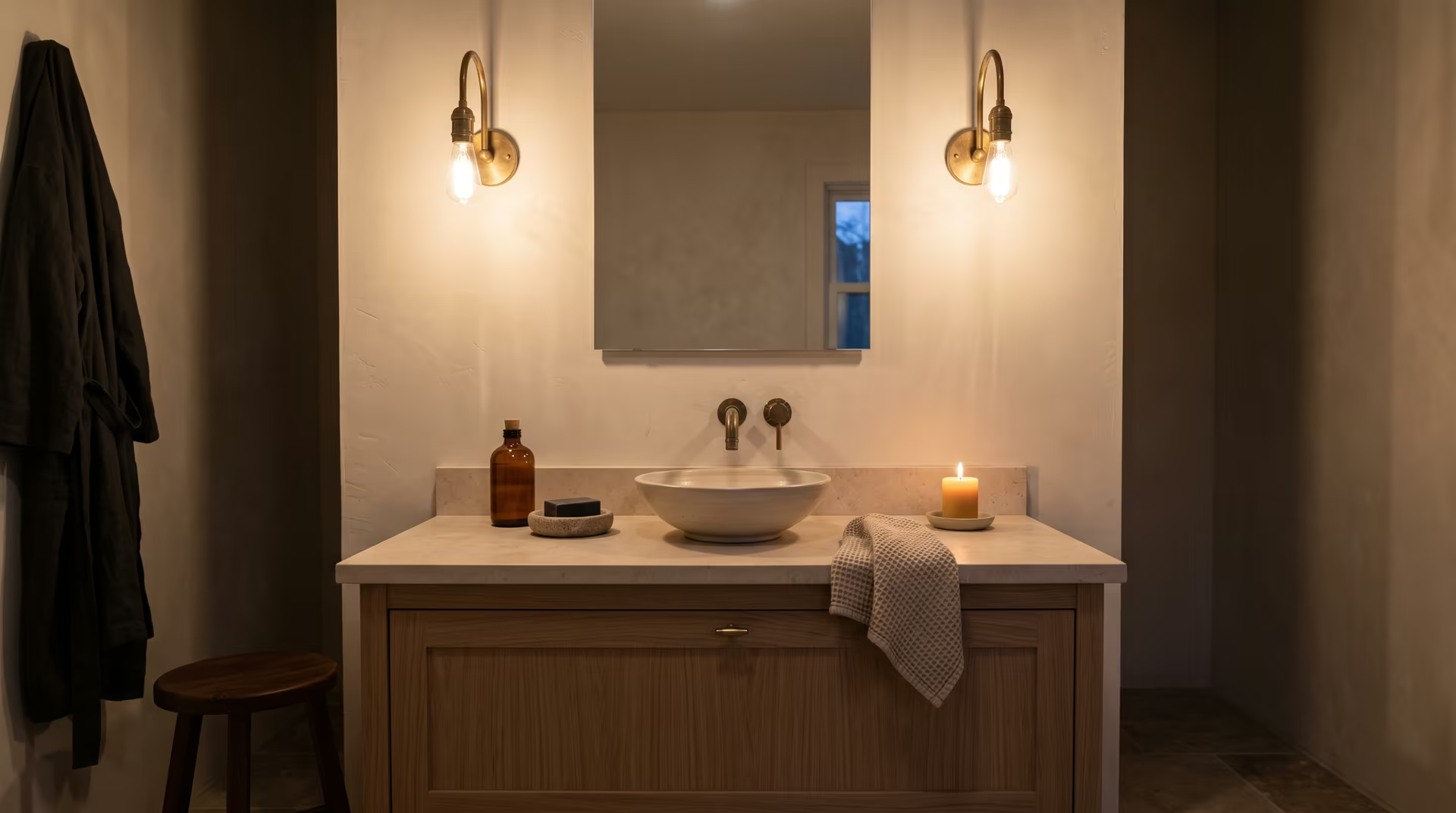
Level one: the bathroom you already have — $0 to $150
Hot bath and cold shower. This is a legitimate version of the practice, not a compromise. A tub filled at 104°F gives you real heat. Your shower on full cold, in most American homes, sits somewhere between 50 and 65°F depending on season and region. Add a cheap thermometer so you know your actual numbers, and a robe worth sitting around in.
Level two: dedicated equipment — $2,000 to $6,000
A sauna blanket or a small indoor infrared cabin for the heat, and a purpose-built cold plunge tub or a chest freezer conversion for the cold. This is where most people who stick with it end up. It fits in a garage, a basement, or a covered patio.
Level three: the outdoor build — $10,000 and up
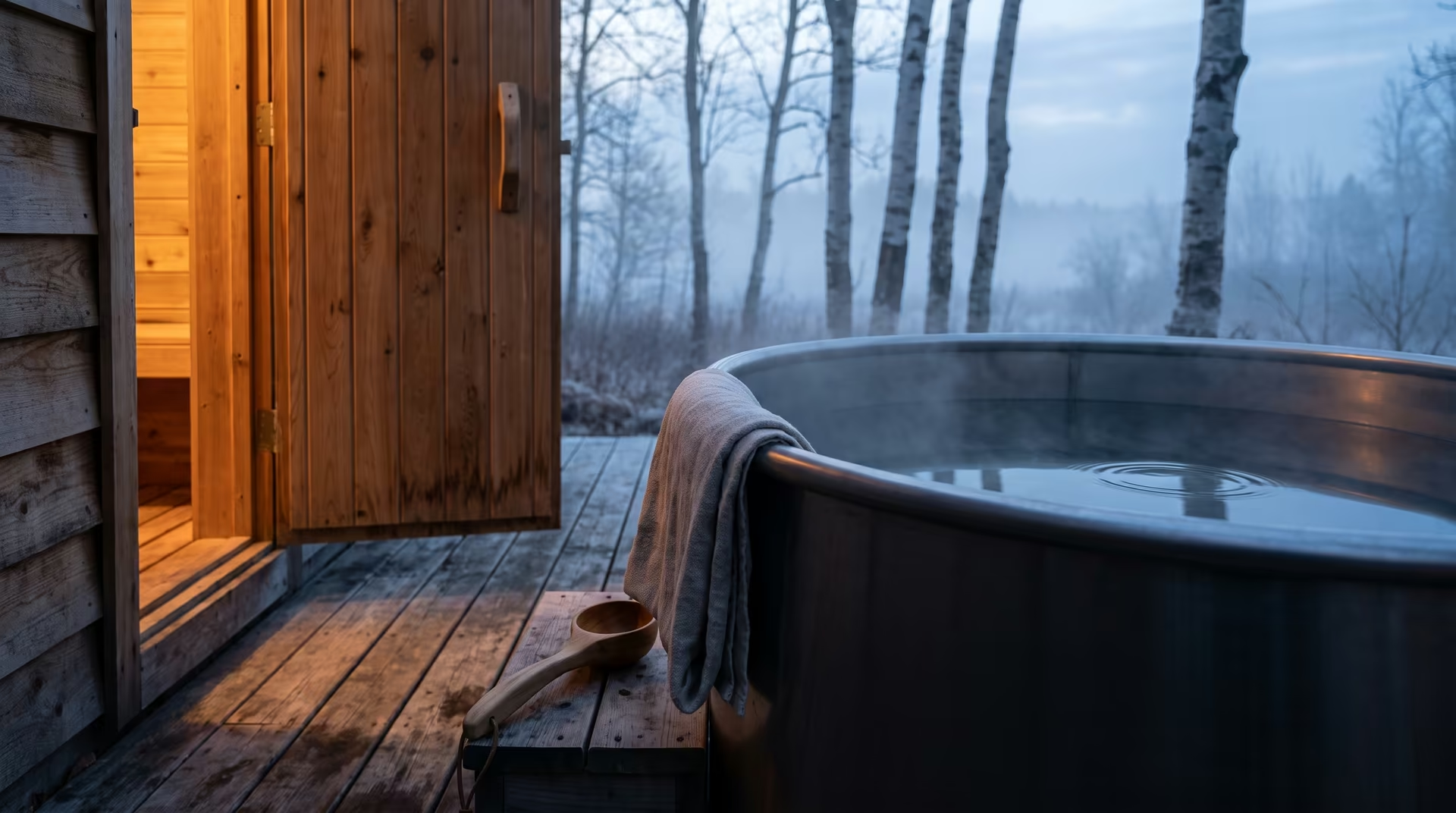
An outdoor sauna, barrel or cabin style, with a chilled and filtered plunge tub beside it. A proper pad, drainage, electrical, and in most places a permit. This is the version in the photographs, and it is wonderful, but it belongs at the end of the process rather than the beginning.
A note on the freezer conversion, since it is the internet’s favorite budget option: it works, and it also involves standing in water inside a modified electrical appliance. If you go that route, have an electrician install a GFCI outlet and take the grounding seriously.
Making the Space Feel Like Somewhere You Want to Be
The behavioral truth about this practice is that adherence is the whole game. A beautiful setup you use twice a week beats a technically superior setup that feels like a chore.
Light it low. Overhead fluorescents undo the entire effect. A single warm lamp, a dimmer, or candles if the space allows.
Give the rest phase a real seat. Not a plastic step stool. A teak bench, a low chair, something with a back. This is the piece people skip and the piece that determines whether they rest for two minutes or ten.
Use textiles you like touching. Waffle-weave or Turkish cotton rather than the towels that came with the house. A heavy robe. A wool blanket for the cool-down in winter.
Keep it uncluttered. Storage for everything, hooks at the right height, nothing on the floor. The visual quiet is part of the effect.
Solve the water problem before it becomes a resentment. A drain, a mat, a designated wet zone. Most home setups die because someone got tired of mopping.
Who Should Skip It or Ask a Doctor First
This is genuinely not for everyone, and the cold portion carries more risk than the heat.
Talk to your doctor before starting if you have a cardiovascular condition, uncontrolled blood pressure in either direction, a history of arrhythmia, Raynaud’s, or a seizure disorder. The same applies during pregnancy, where the heat portion in particular needs medical input rather than internet advice.
Never do the cold portion alone if you are new to it. Never combine either portion with alcohol. If you feel lightheaded, get out and sit down rather than pushing through — the drop in blood pressure on standing after heat is real and has put people on the floor.
None of this is a reason not to do it. It is a reason to start conservatively and to take the first few sessions seriously.
Common Questions
How often should I do contrast therapy?
Two to four times a week is a reasonable target. The Finnish research associated with the strongest outcomes involved four or more heat sessions weekly, though that reflects a culture where the sauna is part of daily life rather than a project.
Does a cold shower count as a cold plunge?
For the purposes of the practice, yes. Immersion cools you faster and more evenly, so the effect is stronger, but a genuinely cold shower held for a minute or two is a real stimulus and it is what most people should start with.
Should I finish hot or cold?
Either. Finishing cold leaves you alert and is popular with morning users. Finishing warm and resting is the traditional pattern and works better in the evening. Try both and notice which one you actually want to repeat.
Can I do contrast therapy in a normal bathroom?
Yes. A hot bath and a cold shower in a standard bathroom is a complete version of the practice. Everything above that is comfort and scale, not necessity.
Is an infrared sauna the same as a traditional sauna?
No. Infrared cabins run cooler, typically 120 to 150°F, and heat you directly rather than heating the air. They are easier to install and cheaper to run. The Finnish research was conducted on traditional saunas, so if you are motivated by that evidence specifically, that distinction matters.
How cold does the water actually need to be?
Between 50 and 59°F is the practical range for most people. Colder is not better past a certain point, and the panic response you get below that range works against the calm you are trying to reach.
Keep Reading
- Sauna Benefits: What the Research Actually Shows — The research behind the heat half of the practice.
- Sauna and Cold Plunge: How to Set Up Both at Home — The build side: layout, chillers, electrical and drainage.
- How Much a Home Sauna Really Costs — What the equipment actually costs, line by line.