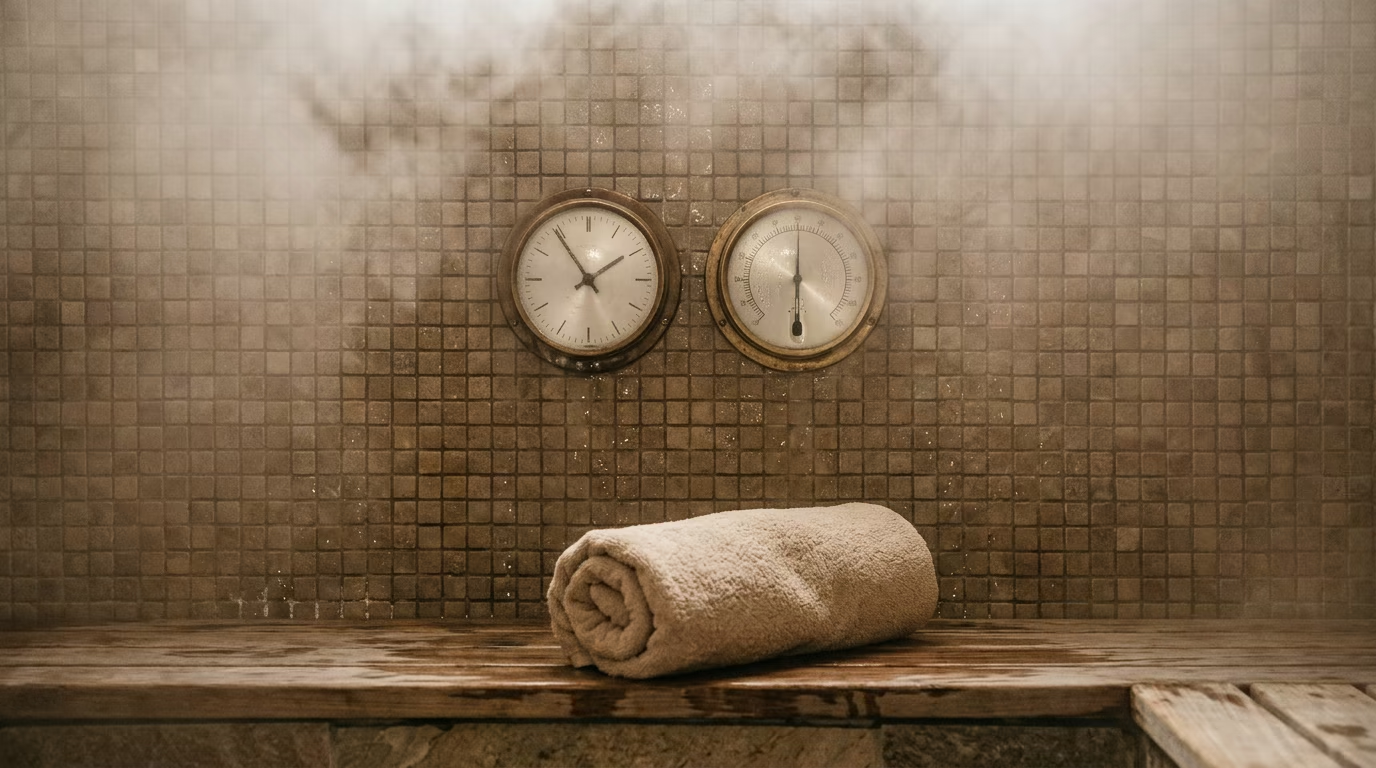
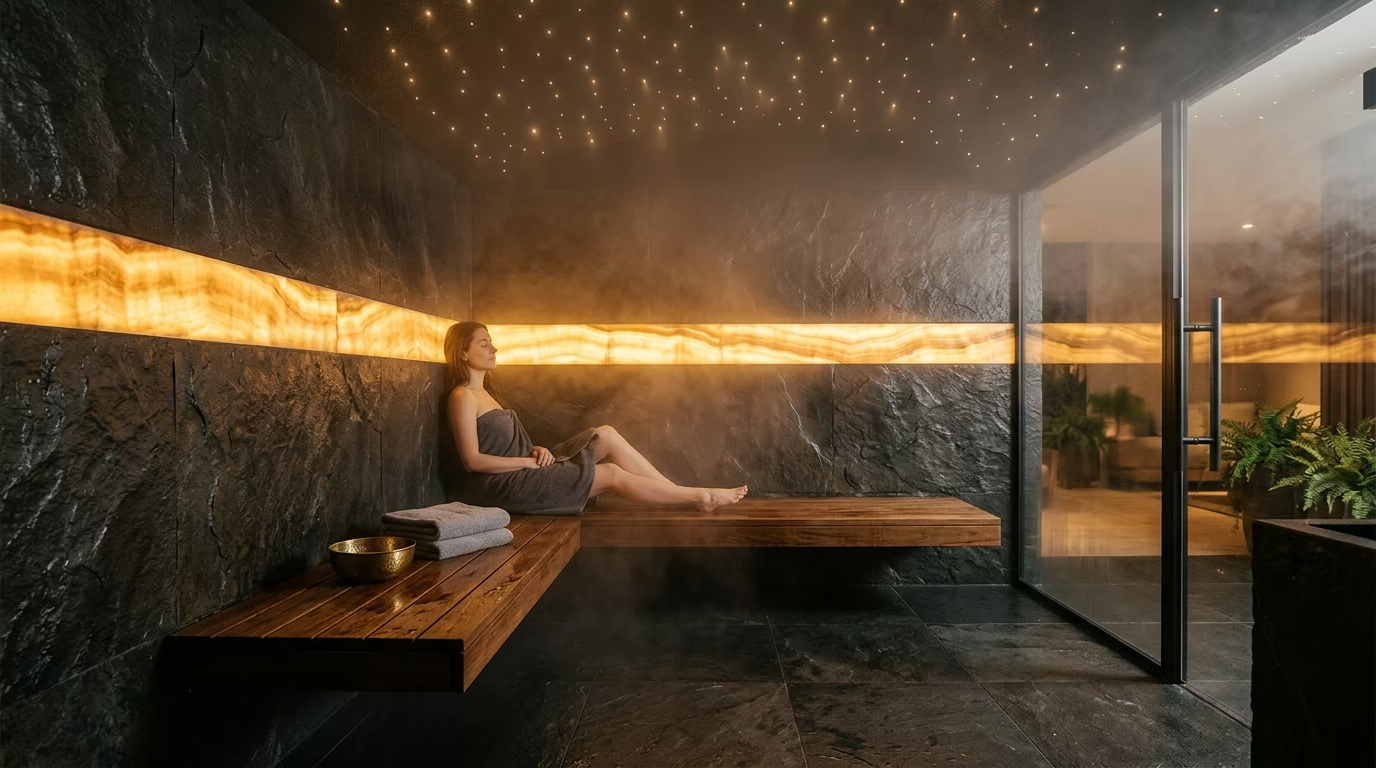
The steam rooms in design magazines share a look. One continuous stone from floor to ceiling. A bench that appears to float. Light that comes from nowhere visible. An arch overhead instead of a flat lid. None of it photographs as a shower with a steam button, which is what most home steam rooms actually are.
The gap between those rooms and an ordinary tiled stall is not primarily money. It is a small set of decisions made in the right order, most of which cost the same as the wrong decisions made in the wrong order. Porcelain costs what porcelain costs. Whether it is laid in six-inch squares with dark grout or in four-foot slabs with joints you have to hunt for is a design choice, not a budget line.
This article walks through those decisions in order: material, bench, ceiling, light, and the finishing details. It assumes a steam shower or small dedicated steam room — somewhere between 3 by 4 feet and 6 by 8 feet — and it is honest about what matters and what is decoration.
What Makes a Steam Room Feel Expensive
Strip the expensive-looking rooms down and they share three traits.
Visual continuity. One material, or at most two, carried across every surface. The eye reads the room as a single carved volume rather than a box assembled from parts. This is the biggest difference between a spa and a bathroom.
Concealed function. You cannot see the light source, the drain is a slot rather than a grate, the fixtures are one finish. Nothing announces its job.
Proportion. The bench is deep enough to actually sit on. The ceiling is high enough that heat stratifies. The door is full-height glass, so the room reads larger than it is.
None of these require rare materials. They require decisions made before the tile order, not after.
Start With One Material
The most common design mistake is treating the steam room like a bathroom: one tile for the floor, another for the walls, a third as an accent. Three materials with three grout colors reads as three surfaces fighting in a 15-square-foot space.
Choose one primary material and run it on the floor, the walls, and the ceiling if the format allows. The bench can be the same material or one deliberate second one — a stone room with a teak bench, or a plaster-toned room with a stone slab seat. Two materials is the ceiling. Three starts to look like a shower.
The restraint has a practical side effect: one material means one grout color, one cleaning routine, and no transition strips — and transitions are where steam rooms leak, discolor and look tired first.
Stone: The Surface That Defines the Room
Natural stone is the reference look, and it behaves differently in steam than in a dry bathroom. Steam rooms run around 110 to 120°F at near-100 percent humidity, and every surface stays damp for long stretches. Porosity matters.
| Stone | Porosity in steam | Look | Notes |
|---|---|---|---|
| Granite | Low | Speckled, cool-toned | The workhorse; dense, forgiving, ages well |
| Quartzite | Low | Marble-like veining, harder | The designer favorite; check it is true quartzite |
| Marble | Moderate | The classic spa look | Etches from acidic cleaners; honed hides water marks |
| Travertine | High | Warm, pitted, Roman | Beautiful but thirsty; needs filling, sealing, resealing |
| Limestone | High | Soft, matte, warm | The riskiest in daily steam; see the avoid list |
Two practical notes. Dense stone stays cooler to the touch at steam temperatures than tile, which is part of why stone benches feel better than tiled ones. And large slab stone is a splurge with a real payoff — one uninterrupted vein across a back wall is the look you are actually paying for in the magazine photographs.
If stone is beyond the budget, the honest substitute is large-format porcelain with a stone look. Modern porcelain does a credible marble or travertine, it is essentially non-porous, and nobody will know from three feet away.
Tile: Format, Color and Grout Lines
If you tile, the decisions that matter are size, grout and sheen — in that order.
Go large. Two-by-four-foot porcelain panels or larger on the walls. Every grout joint is a line that interrupts the room and a seam that collects the film steam leaves behind. A small steam room in large-format tile can have fewer than a dozen visible joints. The same room in subway tile has hundreds, and it reads busy in a space where you sit and stare at the walls for twenty minutes.
Grout is the quiet decision. Use epoxy grout rather than cement grout. Cement grout is porous; in near-constant humidity it darkens, mildews and needs scrubbing. Epoxy costs more and is harder to install, but it absorbs nothing. Match the grout color to the tile as closely as the samples allow. Contrasting grout draws a grid over every wall, and a steam room is the wrong place for a grid.
Matte or honed, not polished. Polished walls in steam show every droplet run and water mark. Honed finishes hide the evidence. On the floor, matte is also a safety decision — you want texture and a wet slip rating under bare feet.
Materials to Avoid
A short list, learned expensively by other people.
- Unfinished or soft wood on walls and ceiling. In sustained humidity it swells, cups and mildews. Wood belongs only as thermally modified species or sealed teak, and mostly on the bench.
- Porous limestone in heavy daily use. It absorbs, stains and erodes at the water line. A weekly steam room can carry it; a daily one should not.
- Pebble floors. They photograph well and feel pleasant for about a month. Then the grout joints — roughly half the floor’s surface — start holding soap film and mildew, and cleaning means a brush and knees.
- Metal trim where bare skin rests. Bench edging, shelf brackets at sitting height, hooks inside the room. At 115°F ambient, metal runs hotter than tile, and a bare thigh finds it immediately.
- Standard drywall anywhere inside the envelope. Every surface needs a proper waterproofing membrane behind it, and paper-faced board has no place in that.
The Bench: The Most Important Object in the Room
You do not stand in a steam room. You sit. That makes the bench the object the whole room is organized around, and it is chronically underbuilt in home steam showers.
Depth first. A comfortable bench is 18 to 24 inches deep. The 12-inch corner seat in prefab shower kits forces you to perch, and perched people leave early. If the room is too small for a deep bench, reconsider the room rather than the bench.
The floating look. The designer move is a bench cantilevered from the wall on concealed steel brackets — no visible legs. It makes the floor read as continuous, which makes the room read bigger, and leaves nowhere for water to pool. It needs to be built into the framing, so it is a rough-in decision, not a finish decision.
Material. A thick stone or solid-surface slab stays agreeably warm and cleans easily. Teak or thermally modified wood feels warmer still and suits darker rooms. Avoid small tile on a bench — there will be a grout joint exactly where the back of your knees rests.
Height. Seventeen to nineteen inches, standard chair height. If the room has the length, a reclined section with a sloped back is the upgrade daily users actually notice.
The Ceiling: Height, Slope and the Arch
Steam rises, pools at the ceiling, and condenses. What happens next is a design decision.
Height. Seven to eight feet is the comfortable range. Above eight you are heating dead air and the generator works harder; much below seven the steam layer sits on your head.
Slope. A flat ceiling drips cold condensate on your shoulders all session. The standard fix is a slope of one to two inches per foot so condensation runs to a wall instead of falling on you. Slope toward a wall, not toward the door.
The arch. The vaulted ceiling in high-end steam rooms is not decoration. A curve does the same job as a slope — condensate runs down it to the walls — while reading as architecture rather than plumbing. A shallow barrel vault is buildable in tile over a formed substrate, and it is the single feature most responsible for the hammam look. If the budget or framing cannot carry a curve, the slope does the functional job.
Light: The Difference Between a Spa and a Shower Stall
Lighting is where good steam rooms are won, and it is the cheapest major lever in the build.
Indirect or nothing. Rooms that feel like spas have no visible fixture. Light comes from a cove at the ceiling edge, or a low strip under the bench lip that washes the floor. The source is hidden; the room glows rather than being lit. A single recessed can over your head is what a shower stall has.
Warm, always. 2700K or lower. Cool white light in a warm stone room makes an expensive build look like a locker room.
Dimmable. Full light for cleaning, low light for sitting. A dimmer is a fifty-dollar part that changes how the room is used.
Rated for the environment. Every fixture inside the room must be rated for wet locations, with the driver outside the envelope. Fiber-optic systems, where the source sits entirely outside the room and only the light travels in, are the premium answer and genuinely low-maintenance.
The Door and the Sight Line
The door is the room’s fourth wall and its biggest piece of glass.
Full-height frameless glass is the default for a reason. It makes a small room read twice its size from outside and keeps it from feeling like a box from inside. Tempered glass, obviously, and gasketed to the ceiling so steam stays in — a steam shower door is sealed, unlike a normal shower door.
The transom question. An operable transom above the door lets you vent the room after use and shed heat without opening the door mid-session. It costs little at build time and cannot easily be added later.
Think about what the glass shows. From the bench you will look through that door for twenty minutes at a time. If it frames a window, a plant, or a calm wall, the room benefits. If it frames the toilet, no material inside the room will save it. This costs nothing and gets considered last, which is backwards.
Small Steam Rooms: Making Three by Four Feel Generous
Most home steam rooms are converted showers, and 3 by 4 feet is a common reality. Small rooms work if every decision pulls toward openness.
- Glass the full width. No tiled return wall beside the door. Every solid surface you remove adds visible volume.
- A floating corner bench keeps the floor continuous and the sight line low.
- Light low, not high. A low glow makes a small room feel like a retreat; a bright overhead light makes it feel like a closet.
- Keep the ceiling pale. Dark ceilings lower a small room; pale stone or tile lifts it.
A 3-by-4 room with one material, a deep corner bench, a sloped ceiling and a hidden light source is a genuinely good room. It is also roughly the size of the steam cabinets on Roman bathhouse plans — the practice was never about square footage.
Color: Why the Calmest Rooms Are Warm Neutrals
The steam room ideas that get saved to inspiration folders are almost never white, and almost never colorful. They are warm neutrals: the gray-beige of travertine, the honey of teak, the cream of honed limestone, the soft green-gray of some quartzites.
There is practical logic under the taste. Warm mid-tones hide the water spotting and slight discoloration steam rooms develop, where pure white shows every mark and dark charcoal shows every mineral trace. Warm tones also flatter skin, which matters in a room you sit in naked.
If you want color, put it in one place: a single wall of deep green tile behind the bench, or a dark floor under pale walls. In a room this small, one strong move is a feature. Two is noise.
The Details That Finish the Room
- The niche: one recessed shelf, lined in the same material, sized for what you actually use. Two niches in a small room is clutter.
- The drain: a linear slot drain against a wall or under the bench keeps the floor plane clean and the slope simple.
- The fixtures: one finish throughout — controls, shower head, steam head, handle. Brushed finishes hide water marks better than polished.
- The control: inside the room, at bench height, so you are not standing up dripping to adjust anything.
- The steam head: low on the wall, away from the bench, and fitted with an aromatherapy cup if scent interests you — a cheap part doing double duty.
Common Questions
What is the best material for a steam room?
Dense, low-porosity material: granite, quartzite, or large-format porcelain. Porcelain is the practical winner for most budgets — nearly non-porous, no sealing, and convincing stone looks. Natural stone wins on feel and depth if you accept the maintenance.
Does a steam room ceiling really need a slope?
Yes, or a curve. A flat ceiling collects condensate that drips cold water onto whoever sits under it. The standard steam room ceiling slope is one to two inches per foot, running toward a wall; a shallow arch does the same job.
How big should a home steam room be?
For one or two people, 3 by 4 to 4 by 6 feet works well, with a bench 18 to 24 inches deep and a ceiling no higher than 8 feet. Bigger rooms need bigger generators and longer heat-up times, so there is no prize for extra volume.
Can a normal shower be converted into a steam shower?
Often, yes — that is how most home steam rooms happen. The conversion needs a full waterproofing membrane on every surface including the ceiling, a sealed full-height glass door, a sloped ceiling, and a generator sized to the room’s cubic footage. The steam shower design ideas above apply to the conversion too.
Is marble a bad idea in a steam room?
Not bad, but honest about its limits. Marble is more porous than granite and etches from acidic cleaners, so it wants sealing on schedule and gentle products. Honed marble in a warm neutral is the classic steam room surface; polished white marble is the one that shows every mark.
What lighting works in a steam room?
Warm (2700K or lower), dimmable, wet-rated, and indirect — cove, under-bench, or fiber-optic. A single overhead can light is the thing to avoid.
Keep Reading
- Steam Shower Installation: What the Build Actually Involves — The membrane, the ceiling slope, the door and the rough-in, in build order.
- What a Home Steam Room Costs — Where the money goes, from generator to glass.
- Spa Bathroom Ideas — The design language outside the steam room door.