A steam shower looks like tile and glass. The part that actually makes it steam is a metal box roughly the size of a briefcase, mounted somewhere you will probably never look at it, boiling water on a 240-volt circuit.
That box is the steam generator, the one component of the project you choose as a product rather than build as a room. Too small and the enclosure never reaches proper steam; too large and you paid for capacity that will never run. The good news is that sizing is arithmetic, not judgment, and the machine is the most forgiving part of the installation.
What follows is the technical picture without the brochure language: what the machine does, how to size it, where it can live, what it needs in plumbing and power, and which features earn their price.
The Short Answer
For a typical residential steam shower of about 120 to 200 adjusted cubic feet, you are looking at a generator in the 6 to 9 kW range. Expect to spend roughly $1,500 to $4,000 for the machine itself, plus a control, a steam head, and the electrical and plumbing work to connect it.
A 30-minute session costs around 40 to 70 cents in electricity at average US rates. The generator is the easy half of the project. The enclosure is the hard half, and no generator compensates for a room that leaks vapor.
What a Steam Generator Actually Does
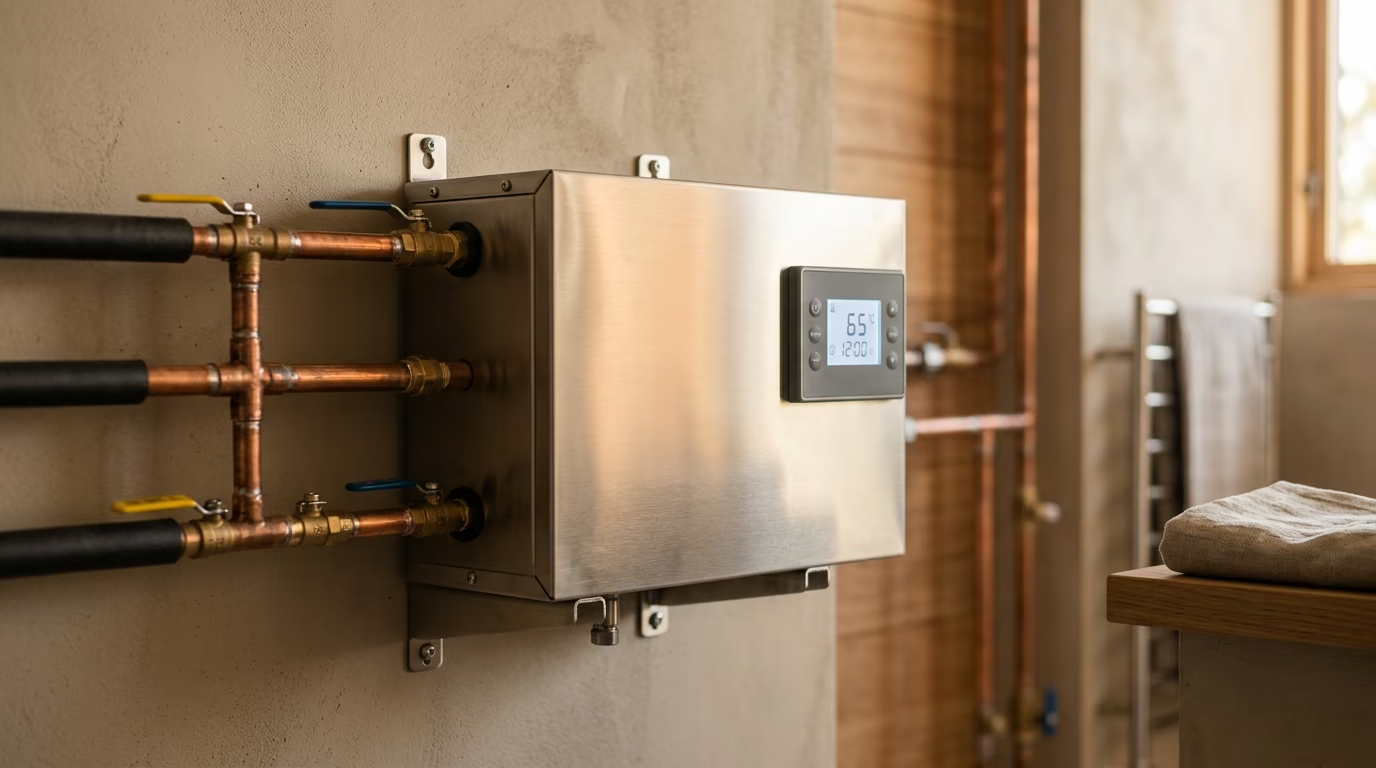
The machine is a small sealed boiler. Electric elements heat a few quarts of water in a tank, and the steam travels through an insulated line to a steam head inside the shower enclosure. A control panel tells it when to start, what temperature to hold, and when to stop.
The room it serves runs around 110 to 120°F at near-100 percent humidity. That is much cooler than a sauna, which typically holds 175 to 195°F in dry air. The steam room feels as intense as the hotter number anyway, because wet heat transfers to your skin quickly and your sweat has nowhere to evaporate.
Two practical implications follow. The generator only boils when you ask it to; it is not a water heater holding a tank hot all day. And it works in short runs — a five-to-fifteen-minute warmup depending on the room’s materials, then a 20-to-30-minute session. A modest appliance doing a modest job, which is why sizing matters more than brand.
Sizing Starts With Cubic Feet
Every manufacturer publishes a sizing chart, and all of them start the same way: multiply the enclosure’s length, width and height in feet to get its raw volume. A shower that measures 4 by 5 feet with an 8-foot ceiling is 160 cubic feet.
| Enclosure volume (ceramic or porcelain tile) | Typical generator size |
|---|---|
| Up to about 100 cu ft (3×4×8) | 5–6 kW |
| About 100–150 cu ft (4×4×8) | 7.5 kW |
| About 150–225 cu ft (4×5×8) | 9 kW |
| About 225–300 cu ft | 10.5–12 kW |
| Over 300 cu ft | 15 kW, or two units on a large room |
Treat those figures as the baseline, not the answer. The number you size against is the adjusted volume — the raw figure corrected for the room’s surfaces, covered next. Charts differ slightly between manufacturers; confirm against the chart of the unit you intend to buy.
What Makes You Size Up
Materials store heat differently, and a cold, dense wall absorbs warmth that a light tile wall would reflect back into the room. Sizing charts account for this with multipliers applied to your raw volume.
Natural stone is the big one. Marble, travertine and similar dense stone are cold to the touch and stay that way. Charts commonly tell you to count roughly double the volume for a fully stone-clad enclosure. A 160-cubic-foot marble room sizes like a 320-cubic-foot one, which moves you up two generator classes. This is the most common reason people underbuy.
Glass counts against you. A full glass wall or a large window is a cold surface with no insulation value. Expect the chart to add volume for it.
Ceilings over 8 feet cost twice. They add raw volume directly, and steam stratifies up high where nobody is sitting. Seven to eight feet is the right height. Taller buys you nothing but a bigger generator.
Exterior walls and windows lose heat to the outside, especially on poorly insulated walls. Charts add a percentage for each.
The practical rule: if two or three of these factors apply, go one size up from your calculated figure. An oversized generator simply makes steam faster and cycles off sooner. An undersized one runs constantly and never quite gets there — and it is the one mistake you cannot fix without replacing the machine.
Where the Generator Lives
The generator never goes inside the steam room. It sits in a dry, heated space within roughly 25 feet of the steam head — the steam line’s practical limit on most residential units; confirm the figure for your model.
The usual locations, in rough order of preference:
- A closet or cabinet near the bathroom. Short line run, easy service access, no weather exposure. The best option when it exists.
- The vanity cabinet. Works if the plumbing fits, but service access is awkward and a leak sits over finished cabinetry.
- The attic above. Common and fine, provided the space stays above freezing. A water line in an unheated attic in a cold climate is a burst pipe waiting for January.
- The basement directly below. Steam lines can run down as well as up. Good service access; a longer vertical run.
Two rules apply everywhere. Leave the service clearance the manual specifies — you will eventually need to reach the elements and the flush valve. And most units are rated for roughly 40 to 100°F ambient, which rules out unheated garages and crawl spaces in much of the country. The machine is quiet — a hum, an occasional gurgle — but a bedroom wall is a poor neighbor for it.
Plumbing, Electrical and Drainage
Water. A cold water feed, typically a 3/8- or 1/2-inch line. Nothing exotic. The generator uses a few gallons per session.
Electrical. A dedicated 240-volt circuit. As a rough guide, a 5 kW unit wants around 20 to 30 amps, a 7.5 to 9 kW unit around 30 to 40 amps, and a 12 kW unit 50 to 60 amps — the exact figure comes off the unit’s data plate, and the manufacturer specifies the breaker and wire size. Older homes on 100-amp service can be tight for the larger units; have an electrician look at your panel before you order, not after. It costs a service call and is the cheapest hour of the project.
Drainage. Units with an automatic flush cycle — which you want, see below — need a drain connection for the discharged tank water. Some drain by gravity, some pump. Plan the drain path when you plan the location.
The steam line runs copper or brass, insulated, sloped so condensate drains back instead of pooling in a low spot. A pooled condensate pocket is what produces the banging and spitting reported from badly run lines.
Controls: In-Shower, Wall and App
The control inside the shower is not optional. You set temperature and time from the bench, mid-session, without stepping out. These are sealed, low-voltage panels built for the wet environment; the actual switching happens back at the generator.
A second control on the wall outside the room is a reasonable redundancy — useful for preheating before you walk in, and for households where more than one person uses it differently.
App and Wi-Fi controls take the preheat idea further: start the generator from your phone so the room is ready when you are. Since warmup is the annoying part of ownership, this is genuinely useful rather than a gimmick. It also adds cost and one more failure point. On a tight budget, the outside wall control covers most of the benefit.
Features Worth Paying For
Worth paying for
- Automatic flush and drain. The tank empties itself after each session instead of sitting full of mineral-laden water. In hard-water areas this is the difference between descaling occasionally and replacing elements regularly. It is the single most valuable option on the list.
- Fast-start or express steam. Designs that keep a small reserve hot or otherwise shorten warmup. Real value if your sessions happen at 6 a.m. on a schedule.
- A second steam head on large or long enclosures, so steam distributes evenly instead of pooling at one end.
- The aroma reservoir built into many steam heads — nearly free, and a few drops of eucalyptus oil in it does what expensive add-on systems claim to.
Usually not worth it
- Chromotherapy lighting packages. Colored LEDs at a meaningful markup; a dimmable warm light does more for the room.
- Built-in sound systems. Electronics and saturated heat age poorly together; a speaker outside the door sounds better and costs $40 to replace.
- Elaborate aromatherapy pump systems. The reservoir on the steam head covers this.
- Decorative control finishes. The control sits behind steam most of its life; nobody is admiring it.
The Brands You Will Meet
Four names cover most of the American residential market.
Mr. Steam is the default: the widest residential line, in most plumbing showrooms, and the name contractors reach for when nobody specifies otherwise.
ThermaSol sits at the premium end, with an emphasis on fast-start operation and app-based control.
Steamist is a solid mid-market presence, common through plumbers and remodelers rather than showrooms.
Kohler arrives through the Kohler bathroom ecosystem and is convenient when the rest of the bath is already specified that way.
All four make competent machines; the honest differences are control design, warranty terms and local dealer support, not steam quality. Buy the correct size from whichever brand has someone nearby who answers the phone.
What It Costs to Run
The math is simple and reassuring. A 7.5 kW generator running a 30-minute session consumes about 3.75 kilowatt-hours. At a national average rate of roughly 17 cents per kWh, that is about 64 cents. A realistic per-session figure lands between 40 and 70 cents depending on your unit, your room and your utility.
| Use pattern | Electricity per year (approx.) |
|---|---|
| One session a week | $20–35 |
| Three sessions a week | $60–110 |
| Daily sessions | $145–250 |
Water cost is nearly invisible. A steam session uses a few gallons — less than the ordinary shower you would have taken instead, which runs around 2 to 2.5 gallons per minute. The generator is cheaper to live with than almost anything else in the bathroom.
Maintenance and Descaling
Scale is the enemy. Minerals in the water coat the heating elements, the coating insulates them, they run hotter, and eventually they burn out. Element failure is the standard repair on steam generators, and hard water accelerates it.
The defense is boring and effective. An auto-flush system handles most of it by emptying the tank after every session. Without auto-flush, drain the tank manually on the schedule the manual gives — typically monthly, more often in very hard water. Some owners in hard-water regions feed the generator softened water; that works, but confirm the manufacturer allows it, since a few specify against certain softening setups.
Elements are consumable over a long horizon. Expect years of service from them with the tank maintained, and expect replacement to run a few hundred dollars in parts when the time comes. This is why the service clearance at installation matters: the person who eventually swaps that element will be working in whatever space you left. Wipe the steam head down occasionally and keep its reservoir clean; the rest of the machine largely looks after itself.
Common Questions
Can any shower become a steam shower?
Almost any shower enclosure can host a steam head, but the room itself has to be rebuilt to hold vapor — vapor-proofed walls and ceiling, a sealed door, a sloped ceiling. That enclosure work is most of the project.
How long does a steam generator last?
The tank and chassis commonly run 10 to 20 years. The heating elements are the wear item, and water hardness decides their lifespan more than anything else. With an auto-flush and reasonable water, expect many years before the first element swap.
Is a bigger generator always better?
No. An oversized unit reaches temperature faster, then cycles — and you paid for capacity you never use. The rule is to size up one step when your adjustments put you between sizes, not to buy the largest unit on the chart.
What size steam generator for shower enclosures do I need?
Size from the enclosure, not the bathroom. Work out the adjusted cubic feet as described above and match the number to the manufacturer’s chart for the unit you are buying — charts differ slightly between brands.
Does a steam shower use a lot of water?
No. A few gallons per session, which is less than a 10-minute conventional shower at standard flow. The steam is produced from a small tank, not a continuous flow.
Can I install a steam generator myself?
The mounting and the water connections are within reach of a capable DIYer. The dedicated 240-volt circuit is electrician work in most jurisdictions, both legally and sensibly, and it usually needs a permit. The enclosure build is the part where DIY most often goes wrong.
What is the difference between a generator and a steam shower kit?
The generator is the machine alone. A kit bundles it with a matched control and steam head, sometimes with the door and other enclosure parts. Kits simplify sizing because the components are selected to work together.
Is a Mr Steam shower worth the money?
Mr. Steam is the market default for good reasons — the widest residential line and the biggest dealer network — but the steam itself is not better than a correctly sized unit from ThermaSol, Steamist or Kohler. Buy on size and local support, not the badge.
Keep Reading
- Steam Shower Installation: What the Process Actually Involves — The enclosure, the door, the ceiling slope and the rough-ins.
- What a Steam Room Really Costs — The full budget, line by line.
- What a Home Sauna Actually Costs — The dry-heat equivalent, for comparison.