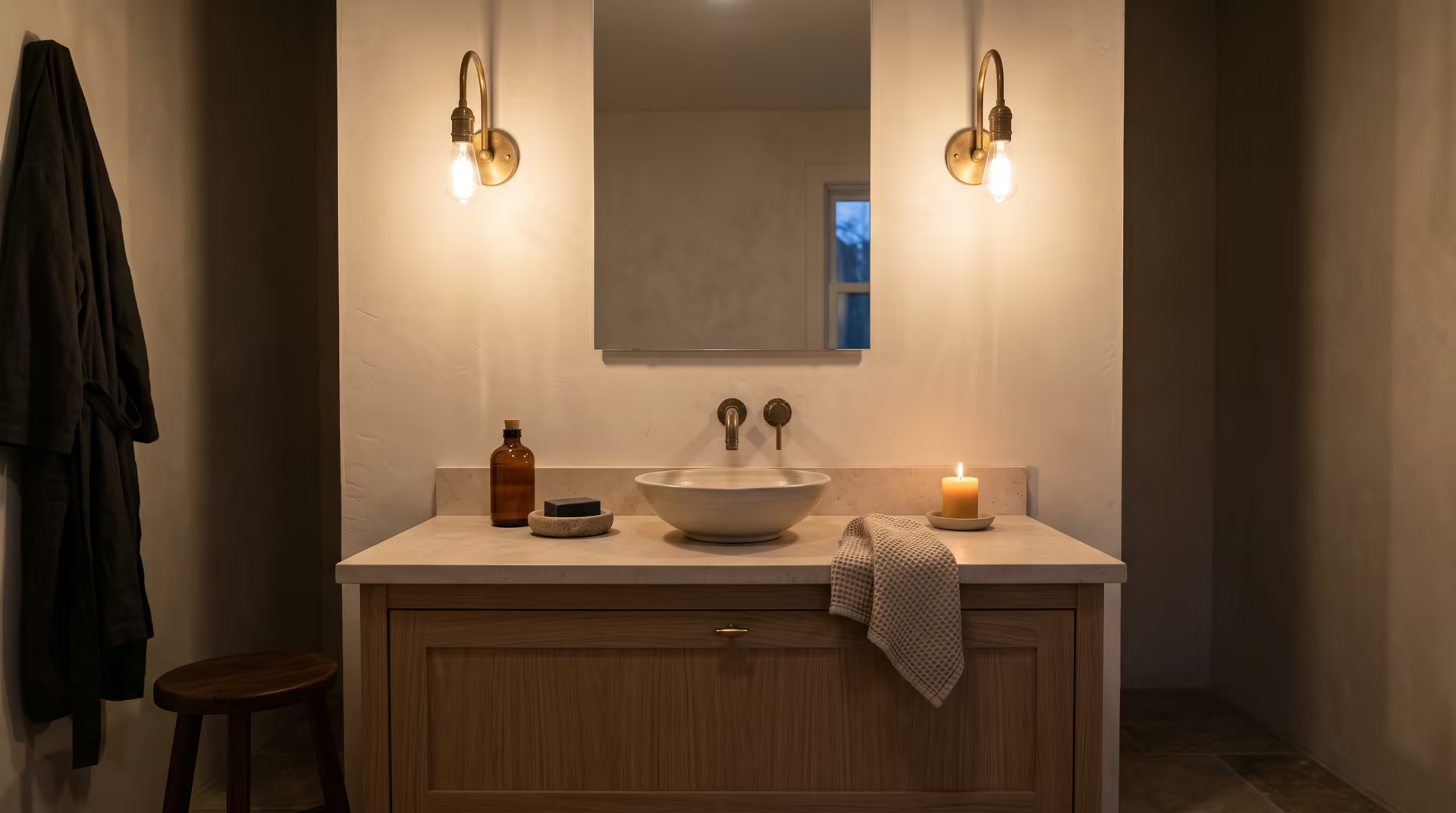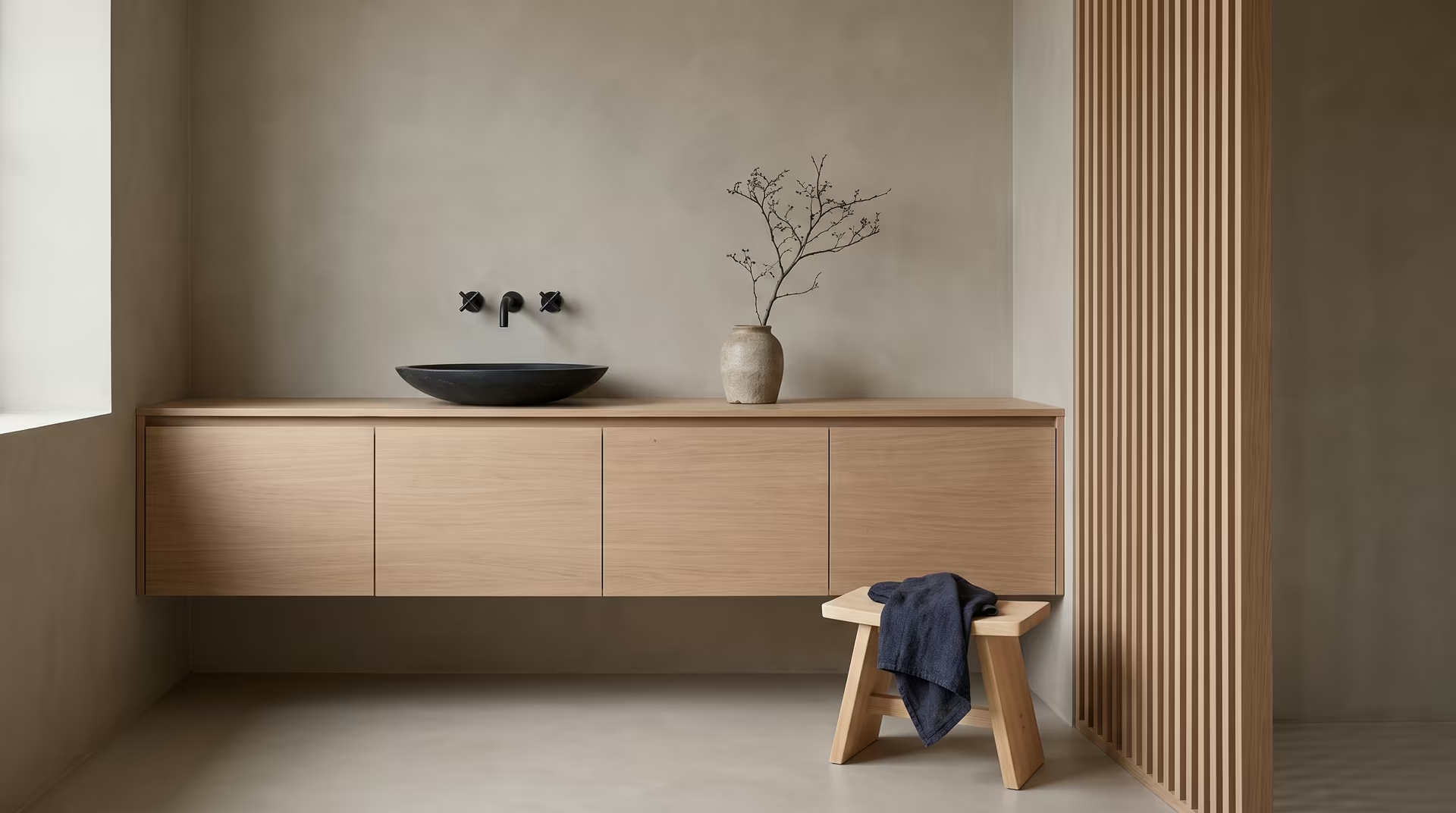
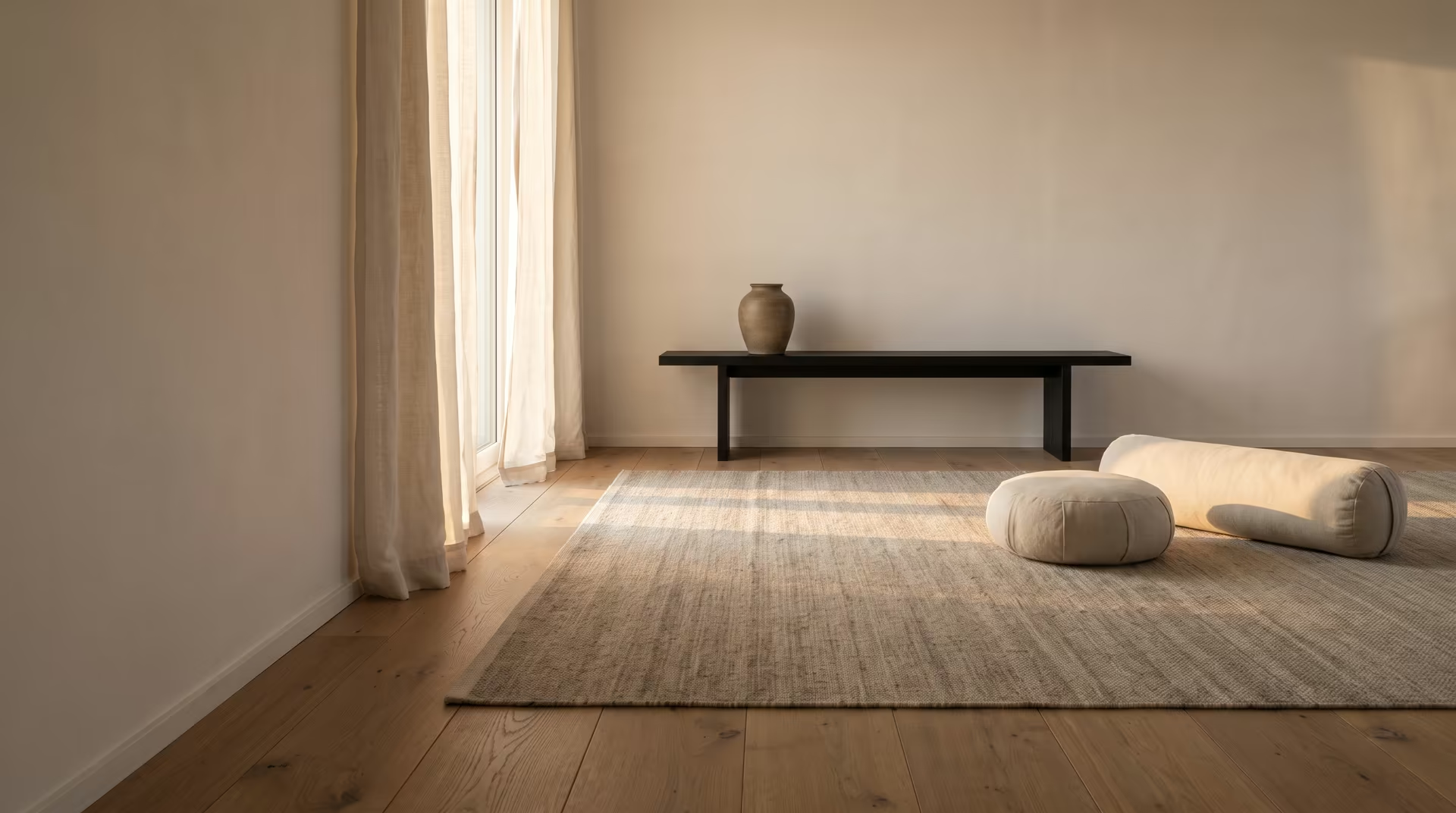
The phrase suggests a dedicated wing with underfloor heating. In practice, most of the wellness rooms worth having started as a spare bedroom that had become a storage unit, a dining room nobody ate in, or the end of a hallway with a window.
What makes a room work for this has almost nothing to do with square footage. It has to do with what you can hear, what the floor feels like, whether the light is any good after dark, and whether the room is empty enough that walking into it does not immediately generate a task.
This is how to make one out of what you already own.
What a Wellness Room Actually Is
A room with one purpose and very little in it.
That is the entire definition, and the second half matters more than the first. A wellness room is not a room full of wellness objects. It is a room that has been deliberately emptied so that one activity — stretching, meditating, reading, breathing, sitting — can happen without the room suggesting anything else.
This is why the spare bedroom rarely works until you remove the bed, and why the corner of a home office almost never works at all. A room containing a laptop is a room about the laptop.
The useful comparison is a hotel room versus your bedroom. Both have a bed. One of them lets your shoulders drop within a minute of walking in, and the difference is that it contains eleven objects instead of two hundred.
Choosing the Room You Already Have
Rank your candidates against four things: door, window, floor, and noise.
A door that closes is close to non-negotiable. Not because of privacy, but because a threshold is what tells your brain the activity has started. Open-plan corners fail at this more often than they succeed.
A window helps enormously but is not required. Natural light makes daytime use pleasant; good artificial light can carry a windowless room entirely.
Noise position matters more than size. A small room away from the kitchen and the street beats a large one that shares a wall with the laundry.
Rooms that tend to work
| Space | Why it works | Watch out for |
|---|---|---|
| Spare bedroom | Door, window, right size | The bed has to go. A daybed is a compromise, not a solution |
| Formal dining room | Often unused, good proportions | Usually open to other rooms — needs a curtain or screen |
| Walk-in closet | Genuinely quiet, enclosed | Ventilation, and it must be fully emptied |
| Attic or bonus room | Isolated, generous | Temperature swings, low headroom at the edges |
| Basement corner | Cool, quiet, private | Damp, and the lighting problem is severe |
| Garage bay | Large, separate | Insulation and heat make or break it |
Ten by ten feet is comfortable. Seven by seven is enough for one person on a mat. A walk-in closet at five by eight has produced better rooms than plenty of spare bedrooms, because nobody was tempted to also put a desk in it.
Decide on One Primary Use
Before buying anything, name the single thing this room is for.
Meditation and breathwork needs the least: a cushion, quiet, and dim light. Yoga or stretching needs floor area, a clear six by three feet minimum, and somewhere to store a mat out of sight. Reading and sitting needs a proper chair and better light than the other two. Sauna or cold plunge adjacency needs drainage and ventilation and belongs in a different conversation entirely.
Rooms designed for one of these and used occasionally for another work fine. Rooms designed for all four at once end up with a chair in the way of the mat and a cushion nobody sits on.
If you genuinely cannot choose, pick the one you would do tonight. That is the honest answer.
Start With the Floor
In a room with almost nothing in it, the floor is most of what you see and all of what you touch. It deserves the largest share of the budget.
Cork is the quiet favorite. Warm underfoot, slightly soft, sound-absorbing, and it handles a mat or bare feet equally well. Around $3 to $8 per square foot.
Wool rug over existing floor is the fastest route. Wool is naturally resilient, warm, and does not off-gas the way synthetic pile does. Buy larger than feels necessary — a rug that stops short of the walls makes a room look smaller and feel less finished.
Tatami or seagrass commits the room to a floor-sitting culture, which is not a bad thing if that is the plan. Firm, faintly fragrant, and visually calm.
Layering is the cheapest good answer: a large flatweave for coverage, a smaller high-pile or sheepskin where you actually sit.
Whatever you choose, the test is simple. Sit on it for ten minutes without a cushion. If you are shifting your weight before minute five, add softness.
Light It for Evening
Most of these rooms get used after dark, and most fail because they were lit for daytime.
The overhead fixture in a spare bedroom is almost always wrong for this. Rather than replace it, stop using it. Put the room on lamps.
What to actually install
- Two or three low sources rather than one high one. A floor lamp in a corner, a table lamp at sitting height, a candle or small uplight at floor level.
- 2200K to 2700K bulbs. Warmer than you would use anywhere else in the house. At 2200K a bulb reads as firelight.
- Dimmers on everything, or smart bulbs if the fixtures are plug-in.
- Nothing at eye level when seated. A bare bulb in your sightline while you are on the floor undoes the whole room.
Natural light, if you have it, wants softening rather than blocking. Unlined linen or cotton curtains diffuse afternoon sun into something usable. Blackout is only worth it if you plan to sleep in there.
Sound and Quiet
Silence is not achievable in a house. Reduced and consistent sound is.
The three things that matter, in order:
Soft surfaces absorb reflection. A rug, curtains, and one upholstered piece will take the hard edge off a room more effectively than any acoustic product sold for the purpose. Empty rooms with hard floors ring, and ringing is what makes a space feel unsettled.
The door gap leaks more than the walls. A draft stopper along the bottom of the door does a genuinely surprising amount, and costs under twenty dollars.
Consistent low sound beats intermittent quiet. A fan, a small water feature, or a white noise machine masks the refrigerator cycling and the neighbor’s car. The brain tunes out constant sound and startles at irregular sound, so adding noise often produces more quiet than removing it.
Acoustic panels are worth it only in rooms with hard floors and high ceilings, and felt panels in a neutral color can be arranged so they read as wall treatment rather than as studio equipment.
Furniture: Low, Few, Soft
The furniture rule for this room: nothing taller than your seated shoulder, and no more than four pieces.
Low furniture makes ceilings look higher and rooms feel calmer. It also keeps the room honest — you cannot accumulate on surfaces that are not there.
A working list for a room used mainly on the floor:
- A zafu or meditation cushion, filled with buckwheat rather than foam, which holds shape and does not compress into nothing
- A bolster, which does more for comfortable sitting than anything else on this list
- A low bench or floor chair with back support, for the days sitting cross-legged is not happening
- One small side table at floor height, for a cup and nothing else
- A large basket for the mat, the blanket and the props
That is five items and it furnishes the room completely. Resist the sixth.
Air, Temperature and Scent
Rooms that are used sitting still have different requirements from rooms that are used moving around.
Temperature runs cold. A body at rest generates far less heat than a body walking through a house, so a room that feels comfortable when you enter will feel cold twenty minutes in. Aim two to three degrees warmer than the rest of the house, or keep a wool blanket within reach — which is the better answer anyway.
Air movement should be minimal but real. Stagnant air in a small closed room becomes noticeable fast. Crack a window before use, or run a quiet purifier on its lowest setting. Avoid pointing any fan at the seating position.
Humidity between 40 and 55 percent is the comfortable band. Dry winter air makes long sitting unpleasant in a way that is hard to identify at the time.
Scent, once, low. One source, one scent, kept the same for months so it becomes associated with the room. Palo santo, cedar, frankincense and vetiver all read as calm rather than decorative. Avoid anything sweet, and avoid rotating scents — the association is the point.
Storage That Keeps It Empty
Every one of these rooms fails the same way. Something gets set down, and within six weeks the room is storage again.
The defense is storage that lives inside the room and closes.
One closed cabinet or chest. Everything the room needs lives in it. A low sideboard, a lidded trunk, a wall cabinet with doors. Open shelving invites display, display invites accumulation.
A hook or two on the back of the door. For a robe, a blanket, a shawl. Hooks are the reason things end up on the floor or do not.
A hard rule that nothing from another room stays overnight. The laundry basket, the ironing board, the box that needs returning. This is not a storage system, it is a habit, and it is the actual difference between a wellness room after three months and a spare room with a cushion in it.
Three budgets
| Level | Spend | What it covers |
|---|---|---|
| Minimum | $200–400 | Wool rug remnant, two lamps with warm bulbs, cushion, bolster, basket, door draft stopper |
| Middle | $800–1,500 | Larger quality rug, floor lamp and table lamp, proper zafu and bolster set, low bench, closed storage, curtains |
| Full | $3,000+ | Cork or tatami flooring, custom curtains, built-in storage, acoustic treatment, dedicated heating |
The minimum version is not a lesser version. Almost everything that makes these rooms work is subtraction, and subtraction is free.
Common Questions
How big does a wellness room need to be?
Seven by seven feet is enough for one person with a mat. Ten by ten is comfortable for two. A walk-in closet of five by eight works well for seated practice. Size is the least important variable on this list.
What is the difference between a wellness room and a meditation room?
A meditation room is a wellness room with one specific use. The broader term usually covers stretching, breathing, reading and rest as well. In practice the setup is nearly identical, and the difference is whether you want floor area for movement.
Can I make a wellness room in a bedroom?
Partly. A corner with a cushion, a lamp and a screen or curtain to visually separate it will work better than nothing. But a room containing a bed is a room about sleep, and most people find the separation never quite takes. If it is your only option, put the corner where you cannot see the bed while seated.
What should I not put in a wellness room?
A television, a desk, a laptop, a mirror facing the seating position, and anything that belongs to another room’s task. Also mostly: more objects. The most common mistake is furnishing it like a room rather than emptying it like one.
Do I need a window?
No. Windowless rooms can be excellent — closets and basements are often the quietest spaces in a house. You will need to work harder on lighting and ventilation, and you should plan on using the room after dark anyway.
How do I keep using it after the first month?
Attach it to something you already do daily rather than to an intention. Ten minutes after your morning coffee, or before you shower in the evening. Rooms built for aspirational routines get used for two weeks. Rooms attached to existing habits get used for years.
Keep Reading
- Spa Bathroom Ideas: 9 Changes That Actually Make the Difference — The bathroom version of the same approach.
- What Contrast Therapy Actually Is — and How to Do It at Home — A practice worth building the room around.
- Japandi Bathroom: The Look, and How It Works in a Small Space — A palette and material list that transfers directly.